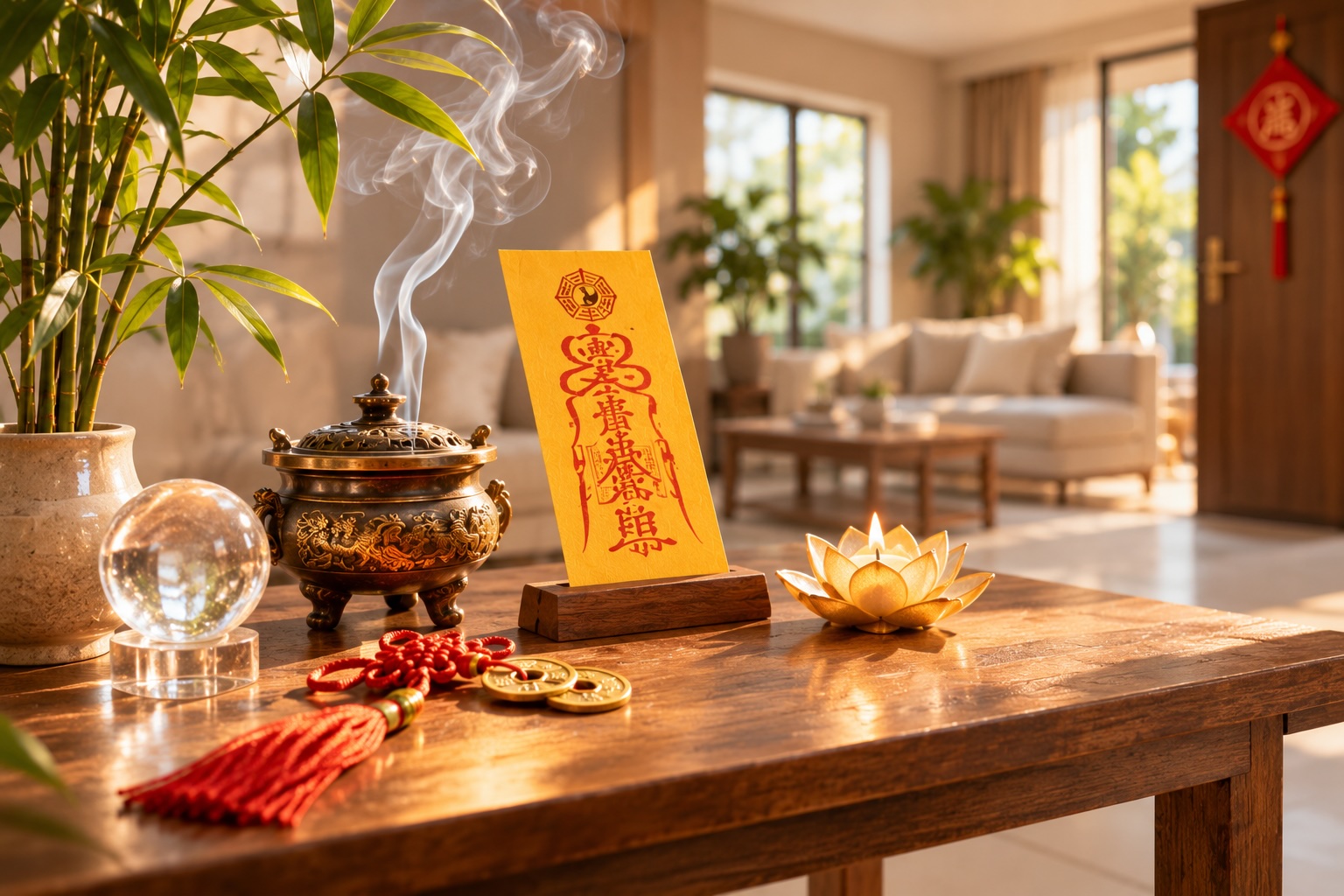
Taoist talismans, also known as Fu (符箓, Fúlù), have been part of Chinese spiritual traditions for centuries. Traditionally used in religious ceremonies, blessings, and protective rituals, these symbolic inscriptions continue to hold cultural and spiritual significance in modern society.
Today, Taoist talismans are associated with more than ancient temple ceremonies. From home Feng Shui cleansing and personal protection to pet memorial rituals and family blessings, they remain meaningful expressions of faith, remembrance, and the desire for harmony.
But how are Taoist talismans used in contemporary life, and what do these practices mean?
1. Home Feng Shui Cleansing and House Blessings
Moving into a new home is an important milestone. In Chinese tradition, some families seek a house blessing or spiritual cleansing ceremony to symbolically welcome positive influences and mark a fresh beginning.
Taoist talismans may be incorporated into these practices alongside incense offerings, prayers, and ceremonial blessings.
Common occasions include:
- Moving into a new house: A house blessing may represent hopes for peace, safety, and prosperity.
- After home renovations: Some families perform cleansing rituals to symbolically welcome a fresh start.
- After a difficult period: Spiritual ceremonies may offer comfort and a sense of renewal.
- Home Feng Shui arrangements: Certain talismans are traditionally associated with household harmony and protection.
In traditional Taoist practice, the meaning and placement of a talisman can depend on its purpose, religious lineage, and ritual context.
These ceremonies should be understood as religious and cultural practices rather than scientifically proven methods of changing a home’s physical environment.
2. Pet Memorial Rituals and Spiritual Farewells
Pets are beloved members of many modern families. Losing a dog, cat, or other companion animal can be an emotionally difficult experience.
In some contemporary Chinese spiritual practices, families seek memorial prayers or religious ceremonies for deceased pets. These may draw on Taoist ideas of compassion, remembrance, and the peaceful transition of life.
Depending on the practitioner and tradition, a pet memorial ritual may include:
- Prayers expressing gratitude for the animal’s companionship.
- Incense offerings and symbolic gestures of remembrance.
- Memorial talismans prepared for a specific ceremony.
- Blessings expressing wishes for a peaceful spiritual journey.
- A dedicated space for photographs or keepsakes.
These practices are sometimes described in Chinese as 宠物超度 (Chǒngwù Chāodù), or pet spiritual deliverance rituals.
However, pet memorial services are not universal across Taoist traditions. Their form and religious interpretation vary among communities and practitioners.
For grieving pet owners, the ceremony may provide a meaningful opportunity to honour a companion animal, express love, and say goodbye.

3. Personal Protection and Everyday Peace of Mind
One of the best-known traditional uses of Taoist talismans is symbolic protection.
Historically, protective talismans have been associated with prayers for safety, well-being, and protection from misfortune.
In contemporary life, people may keep a traditional amulet during important transitions, such as:
- Starting a new job or business.
- Travelling or relocating abroad.
- Beginning university or living independently.
- Entering a new stage of family life.
- Facing uncertainty or major personal changes.
Some people carry a paper talisman in a protective pouch, while others prefer jewellery featuring Taoist-inspired symbols.
The significance of these objects lies in personal belief, cultural identity, and spiritual tradition. They do not replace practical safety precautions or professional assistance.
4. Career, Business and Prosperity Blessings
Business success and financial stability are common aspirations in modern society.
Within Chinese religious culture, certain ceremonies and symbolic objects are associated with prosperity, favourable opportunities, and successful beginnings.
Taoist-inspired practices may be observed during:
- Opening a new shop or office.
- Launching a business.
- Celebrating the Lunar New Year.
- Moving into a new workplace.
- Beginning an important professional project.
For example, a business owner may arrange a traditional blessing ceremony or display culturally meaningful symbols in their workplace.
Prosperity-related talismans express wishes for success and abundance. They should not be interpreted as guarantees of wealth, investment returns, or business performance.
5. Family Harmony, Relationships and Life Transitions
In traditional Chinese culture, family harmony is closely connected with ideas of balance, respect, and well-being.
Some Taoist ceremonies incorporate talismans and prayers to express wishes for peaceful relationships and household harmony.
Modern occasions may include:
- Marriage and new family beginnings.
- Welcoming a child.
- Family reunions and important anniversaries.
- Moving into a shared home.
- Seeking spiritual comfort during challenging family circumstances.
These rituals often emphasise intentions such as gratitude, harmony, and mutual care rather than promising specific outcomes.
6. Remembering Loved Ones and Ancestor Memorial Practices
Ancestor remembrance remains an important part of Chinese religious and cultural life.
Taoist memorial ceremonies may involve prayers, offerings, scriptures, and ritual documents intended to honour deceased family members.
In modern society, these traditions can provide a meaningful connection between generations, particularly for families living far from their ancestral homes.
Some people participate in ceremonies at temples, while others maintain simple remembrance practices at home.
The specific role of talismans varies considerably by religious tradition and ceremony. Not every memorial ritual requires or uses a talisman.
7. Taoist Talismans as Cultural Gifts and Keepsakes
Beyond formal religious ceremonies, Taoist-inspired symbols have become part of contemporary art, jewellery, and cultural gift design.
Examples include:
- Decorative talisman artwork.
- Yin-Yang pendants and jewellery.
- Bagua-inspired accessories.
- Traditional calligraphy prints.
- Protective pouches and symbolic keepsakes.
- Gifts celebrating Chinese cultural heritage.
These objects can introduce people to Taoist philosophy and symbolism.
However, a decorative talisman is not necessarily the same as a ritually consecrated Taoist talisman. In religious practice, a talisman’s preparation, ritual context, and the authority of the practitioner may be important.
Understanding this distinction helps preserve respect for the tradition.