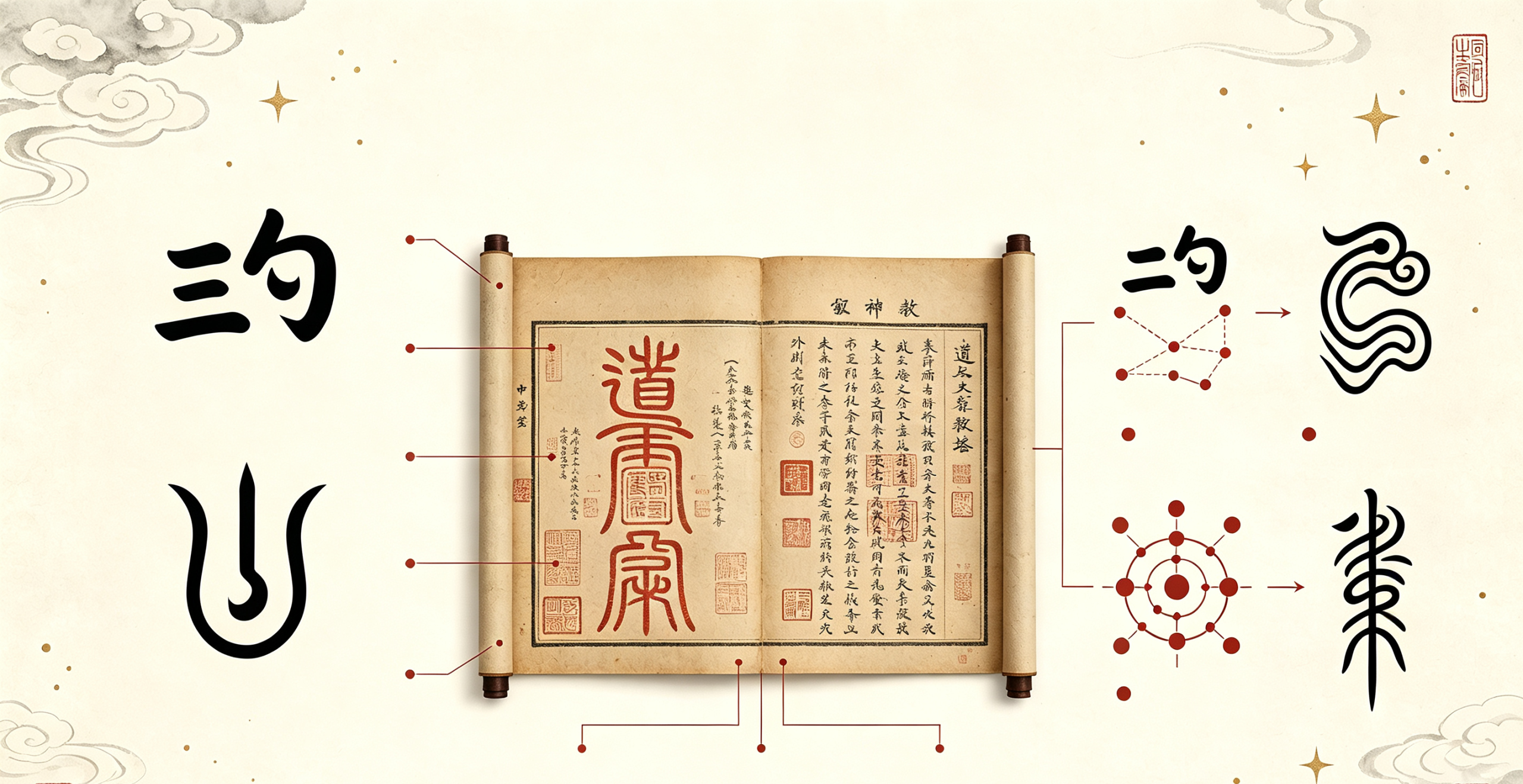
Many people assume that Taoist talismans are a single, unified form of “mysterious writing.” In reality, this is not the case. Different Taoist schools developed their own traditions based on different scriptures, belief systems, pantheons, and ritual practices. As a result, their talismans vary in form, purpose, and methods of writing.
It is important to note that the various Taoist schools are not completely independent systems. Especially throughout their long historical development, different traditions absorbed and influenced one another. Therefore, some talismans seen today can be difficult to attribute to a single school.
1. Zhengyi and the Celestial Masters: The Most Representative Talisman Tradition
Ancestral Center: Longhu Mountain in Jiangxi, which later became a major center of talismanic traditions and the hub of the Three Mountains Talisman Traditions. This tradition also became the most widely circulated among the general population.
As the tradition developed over time, the Celestial Masters tradition gradually evolved into what later became the Zhengyi (Orthodox Unity) tradition. Zhengyi Taoism has a particularly close relationship with talismans and ritual ceremonies. Therefore, in popular imagination, the image of a “Taoist priest drawing a talisman” is often associated first with the Zhengyi tradition.
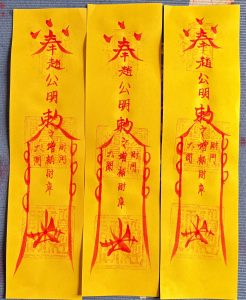
Characteristics:
- Talismanic style: The lines are generally solemn and well-structured, with a highly recognizable style. Common elements include command inscriptions, the Three-Hook symbol (the Sanqing talismanic head), and, in some cases, recognizable Chinese characters. The writing does not necessarily aim to become completely unreadable “celestial script.” Seals often include inscriptions such as the Daojing Shibao and Zhengyi Xuantan seals.
- Core symbols and sacred characters: The Tiangang sacred character, sacred characters of the Six Ding and Six Jia divine generals, and the sacred character of the Celestial Masters.
- Representative talismans: Talismanic traditions of the Zhengyi Mengwei tradition, Tai Sui talismans, protection and safety talismans, household-protection talismans, Five Thunder talismans for suppressing evil, and talismans for dispelling misfortune and resolving difficulties.
- Applications: Prayers for blessings, household protection, dealing with the influences of the year’s energies, warding off evil and disasters, and ordinary rites for the deceased. These talismans may also be used in everyday life by being worn or displayed, as well as in formal ritual ceremonies.
- Religious logic: Receiving an ordination register is the prerequisite. Through receiving a register, a Taoist priest is granted an official position within the celestial bureaucracy and can summon celestial soldiers and divine generals to carry out the commands of the deities, somewhat like issuing an official document from the celestial realm.
2. Lingbao School: Talismans and Ritual Ceremonies
Ancestral Center: Gezao Mountain in Jiangxi. The tradition centers on the Lingbao Wuliang Duren Shangpin Miaojing and is particularly well known for its ritual ceremonies, including rites for the salvation of the dead.
The Lingbao tradition had a profound influence on later Taoist fasting and ritual ceremonies, scripture recitation, rites for the deceased, and religious rituals.
If some early talismanic traditions placed greater emphasis on personal protection and the expulsion of evil, one of the important characteristics of the Lingbao tradition was the gradual development of a more systematic framework of large-scale religious rituals. Therefore, Lingbao talismans are often best understood as part of complete ritual ceremonies. In the later development of Taoism, the Lingbao tradition also had an important influence on Zhengyi Taoism and other Taoist ritual traditions.
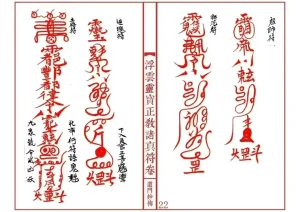
Characteristics:
- Talismanic style: Extensive use of Yunzhang, or “cloud script” celestial writing. The strokes are winding and curling, making them difficult to recognize as Chinese characters. The talismans are elaborate and ornate, often incorporating star charts and cloud-like patterns, making these one of the most visually distinctive features of Lingbao talismans.
- Core symbols and sacred characters: Lingbao cloud-script characters, sacred characters of the various heavens, and secret sacred characters associated with the Nine Levels of the Underworld.
- Representative talismans: Talismans for the salvation and rebirth of the dead, talismans for breaking through the prisons of the underworld, talismans for breaking through the Blood Lake, alchemical and salvation talismans, Golden Light talismans, and cloud-script talismanic seals used when presenting petitions to the celestial realm.
- Applications: These traditions place greater emphasis on rites for the dead, salvation ceremonies, water-and-land rituals, and rituals for refining and liberating souls. They are often burned as part of formal ritual ceremonies when petitions are presented to the celestial realm, and are rarely made into protective talismans for ordinary people to carry.
- Religious logic: The tradition emphasizes compassion and salvation. Through the power of the Lingbao Heavenly Venerable, the rituals seek to relieve deceased souls from suffering in the underworld, free them from karmic difficulties, and resolve karmic connections. Talismans are deeply integrated with the complete system of fasting and ritual ceremonies.
3. Shangqing School: Centered on Visualization, Deities, and the Celestial Realm
Ancestral Center: Mount Mao in Jiangsu. The tradition places great emphasis on visualization practices and internal cultivation, combining talismans with the visualization of deities within the body and celestial stars.
The Shangqing School is closely associated with the Shangqing Scriptures. Its religious teachings emphasize practices such as visualization, scripture recitation, and contemplating divine beings as methods of cultivation. Compared with earlier talismanic traditions that placed greater emphasis on expelling evil and treating illness, Shangqing talismans have a stronger connection with a structured pantheon of deities and a Taoist cosmological view of the celestial realm. Shangqing talismans are also often used together with scriptures, visualization practices, and recitation. In other words, talismans in the Shangqing tradition are not simply tools for “expelling evil”; they are closely connected with how Taoists understand the universe and the divine world.
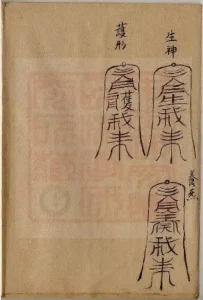
Characteristics:
- Talismanic style: The lines are relatively simple and fluid, with extensive use of astronomical elements. Talismans often depict the Big Dipper, the Three Stellar Offices, and the Twenty-Eight Lunar Mansions. Unlike elaborate cloud-script talismans, they emphasize visualization and inner contemplation of the deities within the body while the talisman is being drawn.
- Core symbols and sacred characters: The sacred character of the Big Dipper, sacred characters of the Three Mao Lords, Great Grotto sacred characters, and symbols associated with the Three Stellar Offices.
- Representative talismans: Shangqing Great Grotto talismans, Big Dipper Longevity Talismans, Three Mao protection talismans, and talismans for summoning divine beings and connecting with the mysteries of the Tao.
- Applications: Longevity, calming the spirit, developing wisdom, and supporting practitioners in their cultivation. They may be used in ritual ceremonies as well as in the Taoist priest’s own practices of internal cultivation and visualization.
- Religious logic: Internal cultivation comes first, while external talismans serve as a complement. When drawing a talisman, the practitioner visualizes the descent of stellar deities and establishes a correspondence between the deities within the body and the stars in the heavens. Through this interaction between the inner and outer realms, the practice is not simply about summoning deities from outside, but also emphasizes inner spiritual alignment.
4. Shenxiao School: Talismans in the Thunder Ritual Tradition
The Shenxiao tradition emerged during the Northern Song Dynasty and was later incorporated into the Zhengyi system. It became particularly famous for its Thunder Ritual tradition.
Within the Shenxiao Thunder Ritual system, “thunder” is not merely the natural phenomenon of lightning and thunder. It is a sacred power with important religious significance. Taoism developed a complete system of Thunder Department deities and corresponding ritual methods, talismans, and ceremonies. An important characteristic of Thunder Ritual talismans is the emphasis on establishing a connection with the deities of the Thunder Department through talismans, incantations, ritual seals, and ceremonial practices. Therefore, if one wants to understand one of the most mysterious and distinctive talismanic traditions in Chinese Taoism, the Shenxiao Thunder Ritual tradition is an important subject of study.
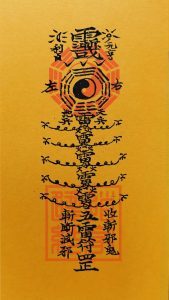
Characteristics:
- Talismanic style: Strong Thunder Ritual characteristics. The talismanic head frequently uses the “rain” radical, while the writing is sharp and powerful. Internal cultivation is highly emphasized, with the principle that “without cultivating the inner elixir, talismans cannot be effective.”
- Core symbols and sacred characters: Sacred characters of the various Thunder Department marshals, Fire sacred characters, Thunder sacred characters, and the square-shaped Thunder talismanic core.
- Representative talismans: Shenxiao Five Thunder talismans, rainmaking talismans, talismans for dispelling epidemics and evil influences, and talismans for subduing and expelling harmful entities.
- Applications: Summoning thunder to avert disasters, expelling evil and harmful entities, preventing epidemics, and praying for favorable weather. These are primarily used in Thunder Ritual ceremonies.
- Religious logic: “My body itself is thunder.” A Taoist priest first cultivates internal alchemy and the interaction of water and fire within the body, generating Thunder Qi through internal cultivation. The practitioner then transforms this inner energy into the talisman through writing, using his own internal energy to connect with the forces of thunder and its divine generals. It is not simply a matter of relying on external deities to issue commands.
5. Qingwei School: A Synthesis of Talismanic and Thunder Ritual Traditions
The Qingwei tradition flourished during the Song and Yuan dynasties and was likewise part of the Thunder Ritual traditions. It was later incorporated into the Zhengyi system of the Ten Thousand Dharma Altar. The Qingwei School is another important talismanic and Thunder Ritual tradition in the history of Chinese Taoism.
During its formation and development, the Qingwei tradition absorbed various Taoist ideas and ritual traditions, giving it a distinctly integrative character. It incorporates both traditional talismanic culture and elements of Thunder Ritual practices and internal cultivation. Rather than developing only one particular type of talisman, it absorbed different Taoist traditions throughout its historical development and formed a relatively complex system of ritual practices. Therefore, when studying Qingwei talismans, it is necessary to consider their relationship with other talismanic traditions at the same time.
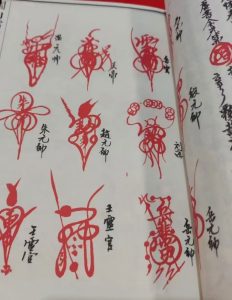
Characteristics:
- Talismanic style: Simple and refined, emphasizing the principle that “the talisman comes from Qi, and Qi comes from the heart.” Compared with the Shenxiao tradition, greater importance is placed on mental cultivation and internal refinement, and the talismanic designs do not excessively accumulate decorative patterns.
- Core symbols and sacred characters: The sacred character of the Qingwei Primordial Heaven and the secret sacred characters of the Thunder Department generals.
- Representative talismans: Qingwei Five Thunder talismans, talismans for treating strange phenomena and averting disasters, and various Thunder Ritual talismans for praying for clouds and rain. The range of talismans is extremely diverse.
- Applications: Expelling evil, averting disasters, prayer, and dealing with various unusual disasters and disturbances.
- Religious logic: The mind and inner nature form the foundation. Only when the mind is pure and the practitioner’s internal Qi is complete can divine beings be invoked. The talisman is simply the external manifestation of the practitioner’s inner cultivation.
6. Quanzhen School: A Tradition Centered on Internal Alchemy
The core of Quanzhen Taoism is the cultivation of both xing and ming—often understood as one’s spiritual nature and life essence. It does not emphasize talismans and does not regard drawing talismans and performing ritual techniques as the core practices of the school.
The Quanzhen tradition emerged during the Jin and Yuan dynasties, centered on the Taoist tradition established by Wang Chongyang and his disciples. In popular perception, Quanzhen Taoism may seem to have little connection with “drawing talismans.” However, as Quanzhen Taoism developed, it also formed and absorbed a rich tradition of fasting and ritual ceremonies. Particularly in its later development, talismans and ritual ceremonies gradually became part of religious activities in Quanzhen temples.
Historically, Zhengyi Taoism placed greater emphasis on talismans and ritual ceremonies, while Quanzhen Taoism placed greater emphasis on internal alchemy, quiet cultivation, and discipline. At the same time, it also developed and transmitted corresponding ritual traditions.
Characteristics:
- Few original talismans within the traditional Quanzhen school: Talismans found in later Quanzhen temples were mostly adopted from various Zhengyi talismanic traditions rather than belonging to an independent, original Quanzhen system.
- Focus on internal cultivation: The emphasis is placed on meditation, scripture recitation, and cultivation, seeking the Tao inwardly rather than relying on external talismans and incantations to communicate with the divine.
- Protective talismans in some Quanzhen temples: A small number of Quanzhen temples have safety and protection talismans, but their forms are generally influenced by Zhengyi traditions rather than constituting an independent and complete talismanic system.
From the perspective of Chinese Taoist history, talismans are not a cultural tradition exclusive to any single school.
The early Celestial Masters tradition established an important foundation for Taoist talismanic practices; the Shangqing and Lingbao traditions further enriched Taoist systems of deities, scriptures, and ritual ceremonies; during the Song and Yuan dynasties, the Shenxiao and Qingwei Thunder Ritual traditions further integrated talismans with Thunder Ritual practices. In later periods, Zhengyi, Quanzhen, and other Taoist traditions continued to inherit and develop these cultural traditions.
Therefore, the Taoist talismans we see today are, in fact, the result of long-term interaction and integration among multiple historical traditions.