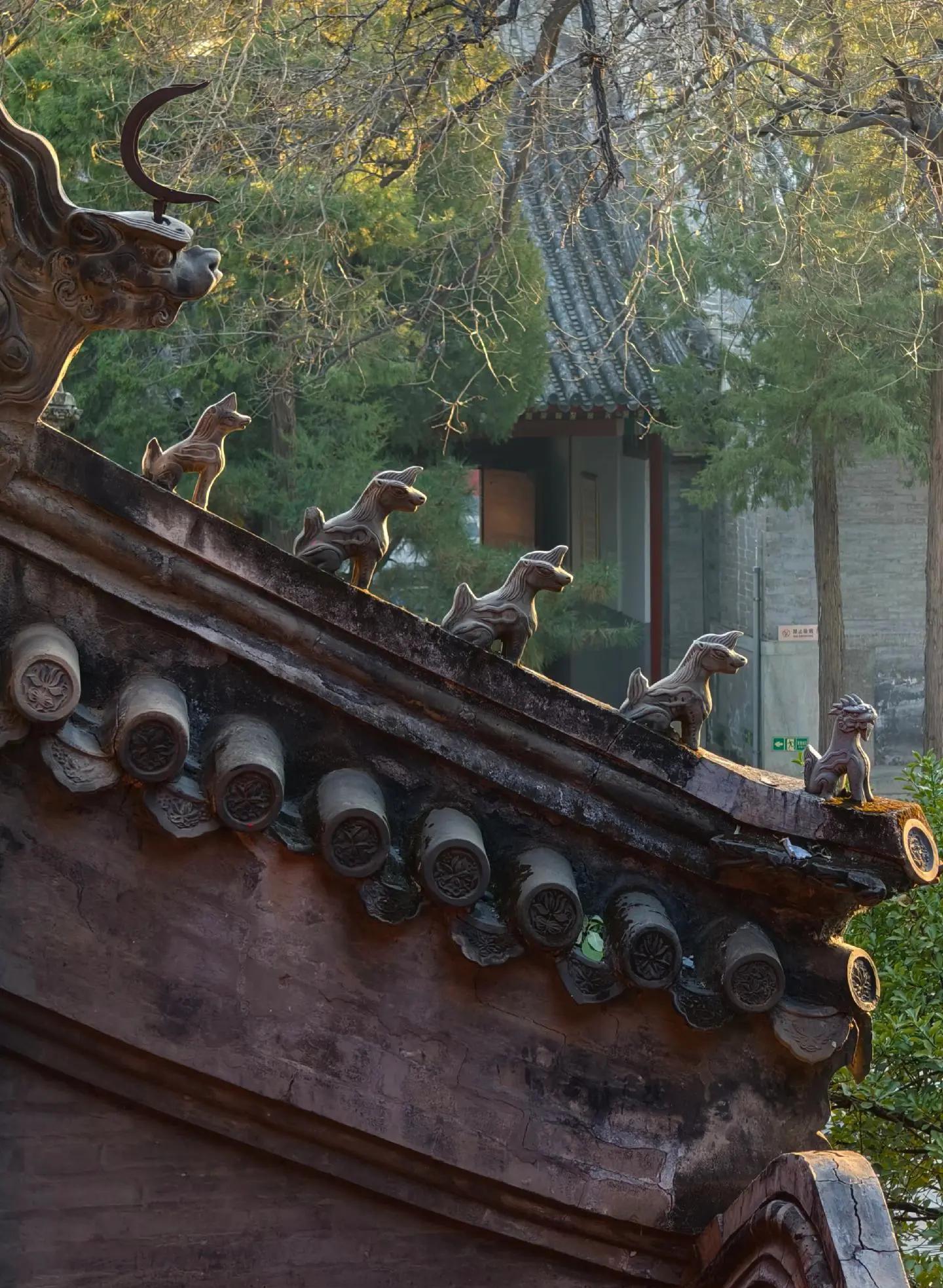
Beijing is famous for its Forbidden City, Great Wall, and traditional hutongs, but the city is also home to numerous historic Taoist temples. These sacred sites preserve centuries of religious traditions, architectural heritage, and local customs, offering visitors a fascinating perspective on China’s cultural history.
If you have one or two days to explore Beijing’s Taoist heritage, three temples are particularly worth visiting: Baiyun Temple (White Cloud Temple), Dongyue Temple, and Huode Zhenjun Temple (Fire God Temple).
Each offers a distinctive experience, from the spiritual traditions of Taoism to ancient architecture and traditional Beijing folk culture.
1. Baiyun Temple (White Cloud Temple): The Spiritual Heart of Quanzhen Taoism
Address: No. 9 Baiyunguan Street, Xicheng District, Beijing
Opening Hours: 8:30 AM – 4:30 PM
Admission: RMB 10 (reference price)
Highlights: Main Gate, Lingguan Hall, Jade Emperor Hall, Three Pure Ones Hall, historic stone inscriptions, and traditional Taoist customs.
About the Temple
Baiyun Temple is one of Beijing’s most significant Taoist temples and an important ancestral temple of the Longmen (Dragon Gate) lineage of Quanzhen Taoism.
Its history dates back to the Tang Dynasty. During the Yuan Dynasty, the renowned Taoist master Qiu Chuji (also known as Changchun) practised and taught here, establishing the temple’s prominent position in the history of Chinese Taoism.
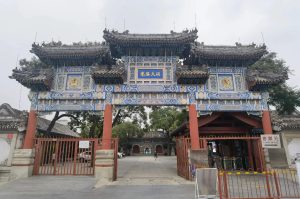
The temple complex is arranged into three main sections: central, eastern, and western. Behind the main halls lies Yunjiyuan Garden, traditionally known as the “Little Penglai,” a reference to the legendary island paradise in Taoist mythology.
Baiyun Temple is also celebrated for its traditional folk activities, particularly during the Chinese New Year temple fair. Popular customs include touching the carved stone monkeys for good fortune and participating in the traditional coin-tossing ritual known as Da Jinqianyan.
With its magnificent halls, peaceful courtyards, and enduring religious traditions, Baiyun Temple is an essential destination for visitors interested in Quanzhen Taoism and Chinese spiritual heritage.
One of the most famous traditional sayings associated with Baiyun Temple is “The Iron-Strong Baiyun Temple, Where the Three Monkeys Never Meet.” This intriguing expression refers to three small stone monkeys hidden throughout the temple grounds.
Rather than being displayed together, the monkeys are carved into different architectural details, including the reliefs on the main entrance gate, the base of a decorative screen wall, and the ornamental patterns of stone monuments. Finding all three during a single visit can be quite a challenge.
According to an old Beijing folk belief, touching the stone monkeys brings good fortune, wards off misfortune, and promotes good health, particularly eyesight. Visitors traditionally touch the part of a monkey’s body corresponding to an area of their own body where they seek healing or protection.
Over the centuries, countless visitors have polished these stone carvings to a smooth, glossy finish through this enduring ritual.
For travellers, searching for the three hidden monkeys is not only a fun experience but also a fascinating way to discover Beijing’s traditional folk customs.
How to Get There
From Beijing Capital International Airport (PEK)
- Take the Capital Airport Express to Dongzhimen Station.
- Transfer to Subway Line 2 and travel to Fuxingmen Station.
- Change to Line 1 and get off at Muxidi Station.
- Exit the station and walk approximately 15–20 minutes to the temple.
From Beijing Daxing International Airport (PKX)
- Take the Daxing Airport Express to Caoqiao Station.
- Transfer to Subway Line 10 and travel to Gongzhufen Station.
- Change to Line 1 and get off at Muxidi Station.
- Walk to Baiyun Temple.
From Beijing South Railway Station
- Take Subway Line 4 to Caishikou Station.
- Transfer to Line 7 and get off at Baiyunlu Station.
- Walk to the temple.
2. Dongyue Temple: Discover Traditional Chinese Folk Beliefs and Taoist Heritage
Address: No. 141 Chaoyangmen Outer Street, Chaoyang District, Beijing
Opening Hours: 8:00 AM – 6:00 PM
Admission: RMB 10 (reference price)
Highlights: Glazed Archway, Daiyue Hall, ancient stone tablets, Taoist deity sculptures, and traditional folk culture exhibitions.
About the Temple
Founded during the Yuan Dynasty, Dongyue Temple is dedicated to the Great Emperor of the Eastern Peak, the Taoist deity associated with Mount Tai.
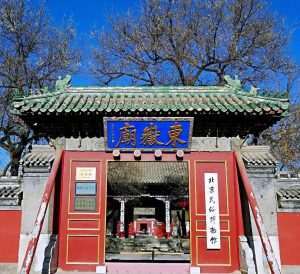
It is one of the most historically significant temples of the Zhengyi tradition of Taoism in northern China.
Dongyue Temple is particularly famous for its extensive collection of sculptures, stone inscriptions, and traditional plaques. Historically, it was known for its “Three Abundances,” reflecting the remarkable richness of its religious and cultural heritage.
One of the temple’s most distinctive features is the Seventy-Six Departments (76 Si), a series of halls featuring Taoist deities associated with different aspects of human life, morality, fortune, and divine judgement.
The temple also preserves numerous stone tablets dating from the Yuan, Ming, and Qing dynasties.
Another well-known attraction is the bronze mythical creature known as Tongte, which is associated with traditional beliefs about good health and protection.
Today, Dongyue Temple also houses the Beijing Folk Customs Museum, making it an excellent destination for visitors interested in Chinese folk religion, traditional festivals, historic architecture, and cultural heritage.
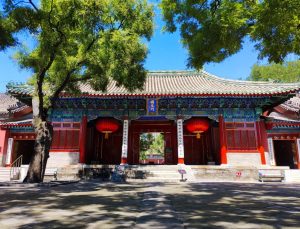
One of the most celebrated attractions at Dongyue Temple is a legendary bronze creature known as Tongte (铜特, pronounced “tè”), affectionately called the “Bronze Mule” by local residents.
This mythical animal has a distinctive appearance, combining the face of a donkey, the body of a mule, the ears of a horse, and the hooves of an ox. Unlike any real animal, Tongte is traditionally believed to be the mount of Wenchang Dijun, the Taoist deity associated with literature, scholarship, and academic success.
According to legend, Tongte could travel thousands of miles in a single day, journeying between the three realms to deliver messages.
An old Beijing folk saying goes: “Touch the Stone Fish at Tanzhe Temple, the Stone Monkeys at Baiyun Temple, and the Bronze Tongte at Dongyue Temple.”
Local tradition holds that touching a particular part of Tongte’s body may bring protection and good health to the corresponding part of one’s own body.
Another remarkable feature of Dongyue Temple is its Seventy-Six Departments (76 Si), a collection of halls representing the supernatural administration of moral judgement in traditional Chinese beliefs.
These halls portray scenes of good and evil, virtue and wrongdoing, and the consequences of human actions. Through sculptures and religious imagery, they served as a kind of traditional gallery of moral stories, encouraging visitors to reflect on their behaviour and lead virtuous lives.
How to Get There
From Beijing Capital International Airport (PEK)
- Take the Capital Airport Express to Dongzhimen Station.
- Transfer to Subway Line 2 and get off at Chaoyangmen Station.
- Change to Line 6 and travel one stop to Dongdaqiao Station.
- Walk approximately 5–10 minutes west to Dongyue Temple.
From Beijing Daxing International Airport (PKX)
- Take the Daxing Airport Express to Caoqiao Station.
- Transfer to Subway Line 10 and travel to Hujialou Station.
- Change to Line 6 and get off at Dongdaqiao Station.
- Walk west to the temple.
From Beijing South Railway Station
- Take Subway Line 4 to Ping’anli Station.
- Transfer to Line 6 and get off at Dongdaqiao Station.
- Walk west along Chaoyangmen Outer Street to reach the temple.
3. Huode Zhenjun Temple (Fire God Temple): A Historic Taoist Sanctuary in Old Beijing
Address: No. 77 Di’anmen Outer Street, Xicheng District, Beijing (East Bank of Qianhai Lake, Shichahai)
Opening Hours: 9:00 AM – 5:00 PM
Admission: Free
Highlights: Traditional entrance gate, Fire God Hall, historic temple architecture, and the surrounding Shichahai neighbourhood.
About the Temple
Huode Zhenjun Temple, commonly known as Shichahai Fire God Temple, is a historic Taoist temple associated with the Zhengyi tradition.
According to historical accounts, it was founded in 632 AD, during the sixth year of the Zhenguan era of the Tang Dynasty, making it one of the oldest surviving Taoist temple sites in central Beijing.
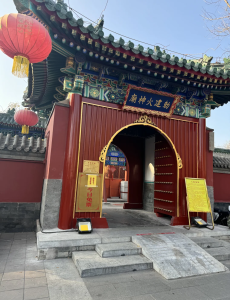
The temple is dedicated to Huode Zhenjun, the Taoist deity associated with fire.
Although smaller than Baiyun Temple and Dongyue Temple, Huode Zhenjun Temple is admired for its elegant traditional architecture, yellow-glazed roof tiles, and tranquil courtyards.
Located beside the lively Shichahai lakes, the temple offers a fascinating contrast between ancient religious traditions and contemporary Beijing life.
After visiting the temple, travellers can explore nearby attractions such as Yandai Xiejie (Tobacco Pouch Street), Houhai Lake, and the Bell and Drum Towers.
This makes Huode Zhenjun Temple an ideal stop for visitors wishing to combine Taoist cultural exploration with a walking tour of Beijing’s historic hutong neighbourhoods.
Of the three temples, Huode Zhenjun Temple (Fire God Temple) is perhaps the most intriguing for its connections to Beijing’s imperial history and lesser-known legends.
During the Ming Dynasty, a series of fires broke out within the imperial palace, causing considerable concern for the Wanli Emperor. According to historical accounts, the emperor ordered the restoration of the Fire God Temple and had its roof covered with green-glazed tiles, hoping that the presence of the Fire God would help protect the imperial capital from devastating fires.
The temple underwent another significant restoration during the reign of the Qianlong Emperor in the Qing Dynasty. During this renovation, the rear hall, known as the Jade Emperor Pavilion (Yuhuang Ge), was adorned with yellow-glazed roof tiles, a colour traditionally associated with imperial architecture.
This exceptional architectural treatment elevated the temple’s status and reflected its importance to the imperial court.
The Qianlong Emperor also personally inscribed a ceremonial plaque bearing the four Chinese characters “Si Nan Li Yong” (司南利用), further highlighting the temple’s royal connections.
Today, Huode Zhenjun Temple offers visitors a rare opportunity to explore the intersection of Taoist beliefs, imperial architecture, and the fascinating legends of old Beijing.
How to Get There
From Beijing Capital International Airport (PEK)
- Take the Capital Airport Express to Dongzhimen Station.
- Transfer to Subway Line 2 and travel to Gulou Dajie Station.
- Change to Line 8 and get off at Shichahai Station.
- Take Exit A1 and walk approximately 5 minutes to the temple.
From Beijing Daxing International Airport (PKX)
- Take the Daxing Airport Express to Caoqiao Station.
- Transfer to Subway Line 19 and travel to Ping’anli Station.
- Change to Line 6 and get off at Nanluoguxiang Station.
- Transfer to Line 8 and travel one stop to Shichahai Station.
- Take Exit A1 and walk to the temple.
From Beijing South Railway Station
- Take Subway Line 14 to Jingtai Station.
- Transfer to Line 8 and get off at Shichahai Station.
- Take Exit A1 and walk approximately 5 minutes to the temple.
Travel Tips for Visiting Taoist Temples in Beijing
1. Dress Respectfully
Wear appropriate clothing and maintain a respectful attitude when entering temple grounds. Avoid loud conversations and do not touch religious statues, ceremonial objects, or offerings without permission.
2. Follow Photography Guidelines
Photography is generally permitted in outdoor courtyards, but restrictions may apply inside worship halls. Always follow posted notices and instructions from temple staff.
3. Plan Your Visit Early
Try to arrive in the morning or early afternoon to allow enough time for sightseeing. Avoid arriving shortly before closing time.
4. Check Opening Hours Before Travelling
Temple opening hours, admission fees, and visitor access may change during public holidays, religious ceremonies, or special events. Check the latest information before your visit.
5. Use Public Transport
Beijing’s extensive subway network provides convenient access to all three temples. For international visitors, public transport is often a practical way to avoid traffic congestion.
Final Thoughts: Experience a Different Side of Beijing
Exploring Beijing’s Taoist temples offers a unique opportunity to discover the city’s spiritual traditions, architectural heritage, and centuries-old folk culture.
Baiyun Temple introduces visitors to the history and teachings of Quanzhen Taoism. Dongyue Temple reveals the fascinating world of Chinese folk beliefs and traditional religious art. Huode Zhenjun Temple offers a peaceful cultural experience surrounded by the historic streets and lakes of old Beijing.
Whether you are passionate about history, architecture, religion, or cultural travel, these three temples provide a rewarding journey beyond Beijing’s most famous tourist attractions.
For visitors with limited time, consider exploring Baiyun Temple in the morning, Dongyue Temple in the early afternoon, and finishing the day around Huode Zhenjun Temple and the scenic Shichahai area.