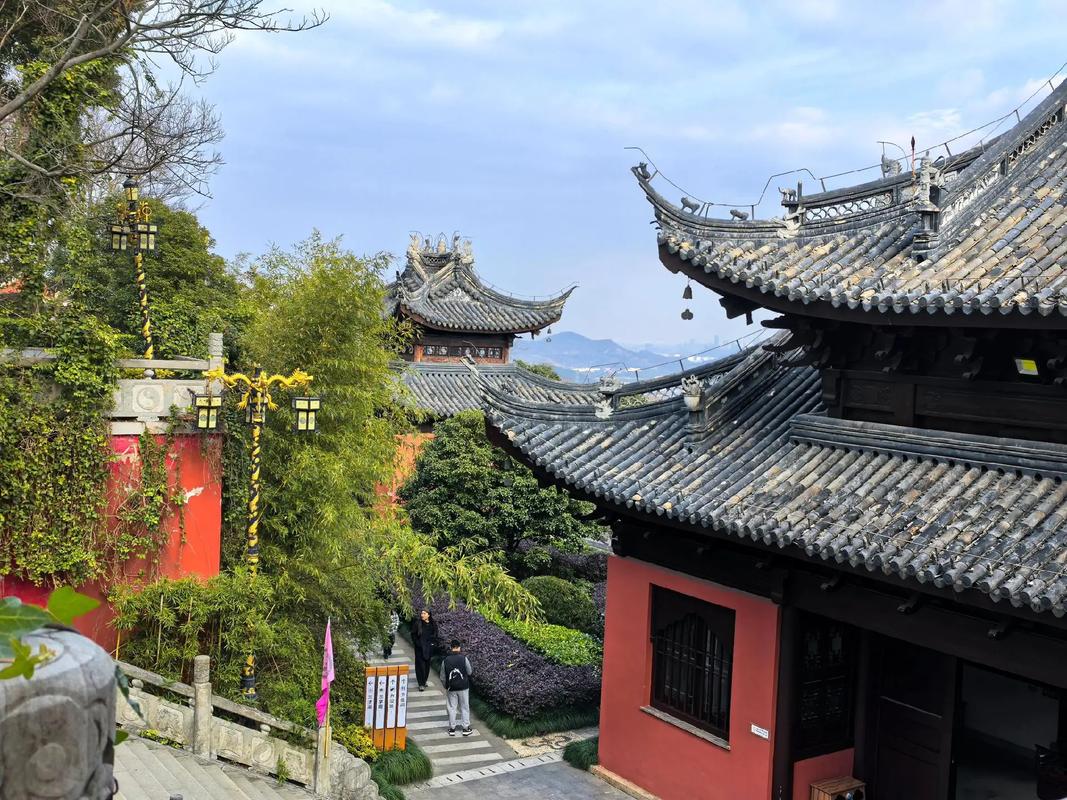
Discovering a Different Side of Jiangnan Culture Through Ancient Temples, Old Streets, and Mountain Retreats
When people think of Suzhou, they often picture classical gardens, Kunqu Opera, Pingtan storytelling, ancient bridges, and peaceful waterways. Famous landmarks such as the Humble Administrator’s Garden, Lingering Garden, Lion Grove Garden, and Tiger Hill have shaped the city’s familiar image.
Yet beyond these well-known attractions lies another important cultural tradition that is often overlooked: Taoism.
While Taoism in Hangzhou is closely associated with the mountains and waters around West Lake, Taoism in Suzhou has historically been deeply connected with the ancient city, traditional neighborhoods, gardens, mountains, and local communities. In ancient Suzhou, Taoist temples were not necessarily isolated religious sites hidden deep in the mountains. Some stood right in the heart of the bustling city, while others were built among the forests and mountains around Taihu Lake and Mount Qionglong.
For travelers interested in Chinese history, traditional religion, and local culture, these temples offer a different way to understand Suzhou beyond its classical gardens.
01 Xuanmiao Temple | One of the Most Historic Taoist Temples in Jiangnan
A 1,700-Year-Old Zhengyi Taoist Temple in the Heart of Guanqian Street
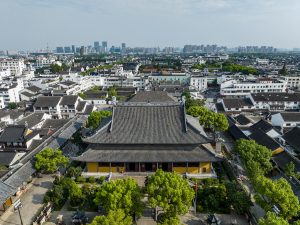 Xuanmiao Temple has a history of more than 1,700 years. It is widely regarded as one of the most important historic Taoist temples in the Jiangnan region and is one of the most representative Taoist landmarks in Suzhou.
What makes the temple particularly interesting is its location.
Unlike many famous Taoist temples that are tucked away in remote mountain areas, Xuanmiao Temple stands directly in the heart of Guanqian Street, one of the busiest commercial areas in the historic center of Suzhou.
Outside the temple, visitors encounter busy streets, shops, restaurants, and crowds. Inside, however, the atmosphere becomes noticeably quieter, with ancient halls and traditional courtyards creating a peaceful contrast with the surrounding city.
This striking combination of urban life and religious space is one of the most distinctive features of Taoist culture in Suzhou.
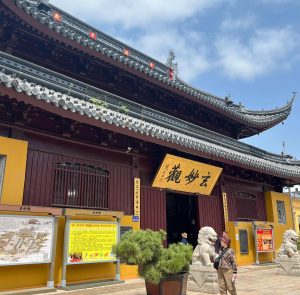 Rather than always seeking monumental scale or complete isolation from everyday life, traditional Taoist temples in Jiangnan often developed in close relationship with the cities and communities around them.
For this reason, Xuanmiao Temple is not only a religious site but also an excellent place to observe how Taoism became integrated into the daily life of an ancient Chinese city.
Address: No. 94, Guanqian Street, Gusu District, Suzhou, Jiangsu Province
Admission: RMB 10, including incense
Opening Hours: 7:30 AM–4:30 PM, with last admission at 4:15 PM in winter; opening hours are extended to 5:00 PM in summer
How to Get There
From Sunan Shuofang International Airport:
Take the airport shuttle bus to Tuanjie Bridge in Suzhou, then transfer to Metro Line 4 and get off at Chayuanchang Station. The temple is about a three-minute walk from the station. The journey takes approximately one hour in total.
From Suzhou North Railway Station:
Take Metro Line 2 and transfer to Line 4 at the appropriate interchange station. Get off at Chayuanchang Station and walk to the temple. The journey takes approximately 45 minutes. A taxi takes around 35 minutes, depending on traffic.
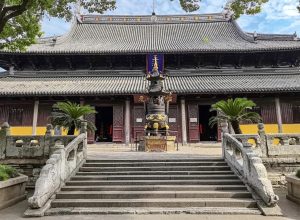
02 Shangzhen Taoist Temple on Mount Qionglong | A Taoist Sanctuary in the Mountains
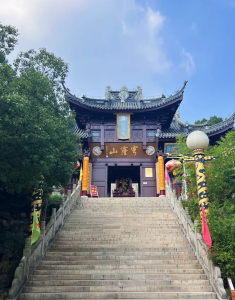 A Historic Mountain Temple on Suzhou’s Highest Peak
Located near the summit of Mount Qionglong, Shangzhen Taoist Temple represents a very different side of Suzhou’s Taoist tradition.
Mount Qionglong is known as the highest mountain in the Wuzhong area of Suzhou, and has long been associated with Taoist culture.
If Xuanmiao Temple represents what Taoism looks like when it becomes part of an urban environment, Shangzhen Temple offers a glimpse of Taoism in its traditional mountain setting.
According to tradition, the temple is associated with the Three Mao Brothers, important figures in the history and legends of Taoism who are said to have practiced here.
The temple was rebuilt and developed under the leadership of Shi Liangsheng, a Taoist priest known as the Iron Bamboo Taoist, during the Qing Dynasty. At its height, the temple is said to have been home to hundreds of Taoist practitioners and became an important center for the transmission and ordination traditions of Taoism in the Jiangnan region.
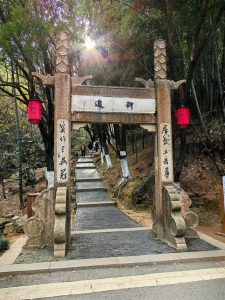 The temple is also connected with numerous stories about Emperor Qianlong of the Qing Dynasty. According to local tradition, the emperor visited Shangzhen Temple six times during his six journeys to Jiangnan, praying for blessings and leaving behind imperial inscriptions and stone tablets.
Today, the temple follows the natural contours of the mountain, with its buildings arranged along the slopes. As you climb higher, you can enjoy expansive views over the surrounding countryside and, on clear days, toward Taihu Lake and the Suzhou plain.
Compared with the temples in the city center, Shangzhen Temple offers a quieter and more contemplative experience. The forested surroundings, mountain paths, and traditional Taoist architecture make it an ideal destination for travelers who want to experience the relationship between Taoism and the natural landscape.
Address: Sanmao Peak, Mount Qionglong Scenic Area, Wuzhong District, Suzhou
Admission: Included with the entrance ticket to Mount Qionglong Scenic Area; there is no separate admission fee for the temple
Opening Hours: 8:00 AM–5:00 PM
How to Get There
From Sunan Shuofang International Airport:
Take the airport shuttle bus to Suzhou city center, then continue by taxi or private car to Mount Qionglong. Public transportation is available but generally takes considerably longer.
From Suzhou North Railway Station:
Take Metro Line 2 and transfer to Line 4, then continue by Bus 64 to Mount Qionglong Scenic Area. A taxi takes approximately 50 minutes, depending on traffic.
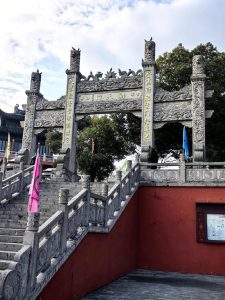
03 Suzhou City God Temple | Taoism, Folk Beliefs, and the Traditional Chinese City
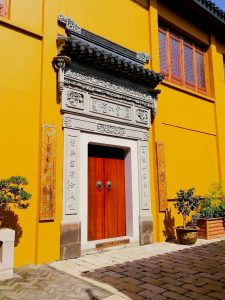 An Ancient Taoist Site Connected to the History of Suzhou
Located on Jingde Road in the historic center of Suzhou, Suzhou City God Temple was originally established during the Ming Dynasty.
While Xuanmiao Temple represents the formal Taoist temple tradition of Suzhou, the City God Temple provides another important perspective: the relationship between religion, folk beliefs, and traditional urban society.
For visitors encountering Chinese traditional religion for the first time, one common question is: Is the City God part of Taoism, or is it a form of folk religion?
The answer is not entirely straightforward.
City God worship existed throughout traditional Chinese urban society for centuries and gradually became closely associated with Taoism. Traditionally, the City God was regarded as the guardian deity of a city, responsible for protecting its residents and maintaining order.
 At the same time, City God temples were closely connected with local government, ideas of justice and morality, public order, and community life. As a result, they occupied a unique position between organized religion, local government, and popular belief.
This makes the City God Temple particularly valuable for understanding how people in traditional China imagined and experienced their cities.
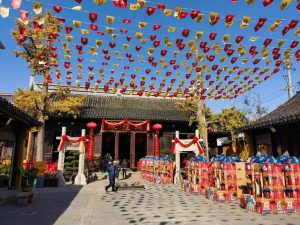
The architectural complex retains elements of its historic Ming-era layout, with traditional halls, courtyards, old trees, and tiled roofs. Tucked away among the old streets of Suzhou, the temple is generally quieter than the city’s major tourist attractions.
Historical inscriptions and stone tablets from the Ming and Qing periods also provide clues about the religious practices and everyday beliefs of local residents over the centuries.
For travelers interested in Chinese folk religion, Taoism, local history, and traditional urban culture, Suzhou City God Temple offers a fascinating window into the everyday spiritual life of Jiangnan.
Address: No. 94, Jingde Road, Gusu District, Suzhou
Admission: Free
Opening Hours: 8:30 AM–4:45 PM
How to Get There
From Sunan Shuofang International Airport:
Take the airport shuttle bus to central Suzhou, then take Metro Line 2 to Shilu Station. The temple is approximately a 10-minute walk from the station.
From Suzhou North Railway Station:
Take Metro Line 2 directly to Shilu Station, then walk to the temple. The journey takes approximately 40 minutes.
A Different Way to Experience Suzhou
These three temples represent three different dimensions of Taoist culture in Suzhou.
Xuanmiao Temple shows how Taoism became deeply integrated into urban life and the commercial heart of an ancient city.
Shangzhen Taoist Temple on Mount Qionglong reflects the traditional relationship between Taoism and the mountains, forests, and natural landscape.
Suzhou City God Temple reveals the complex connection between Taoism, folk beliefs, local communities, and traditional systems of urban order.
Together, they provide a broader perspective on Suzhou’s cultural heritage.
If the classical gardens show visitors the refined aesthetic world of Jiangnan, these Taoist temples offer another side of the region—one shaped by religion, local traditions, mountains, ancient cities, and everyday life.
For travelers willing to look beyond Suzhou’s most famous attractions, this can be one of the most rewarding ways to discover the city’s lesser-known cultural heritage.