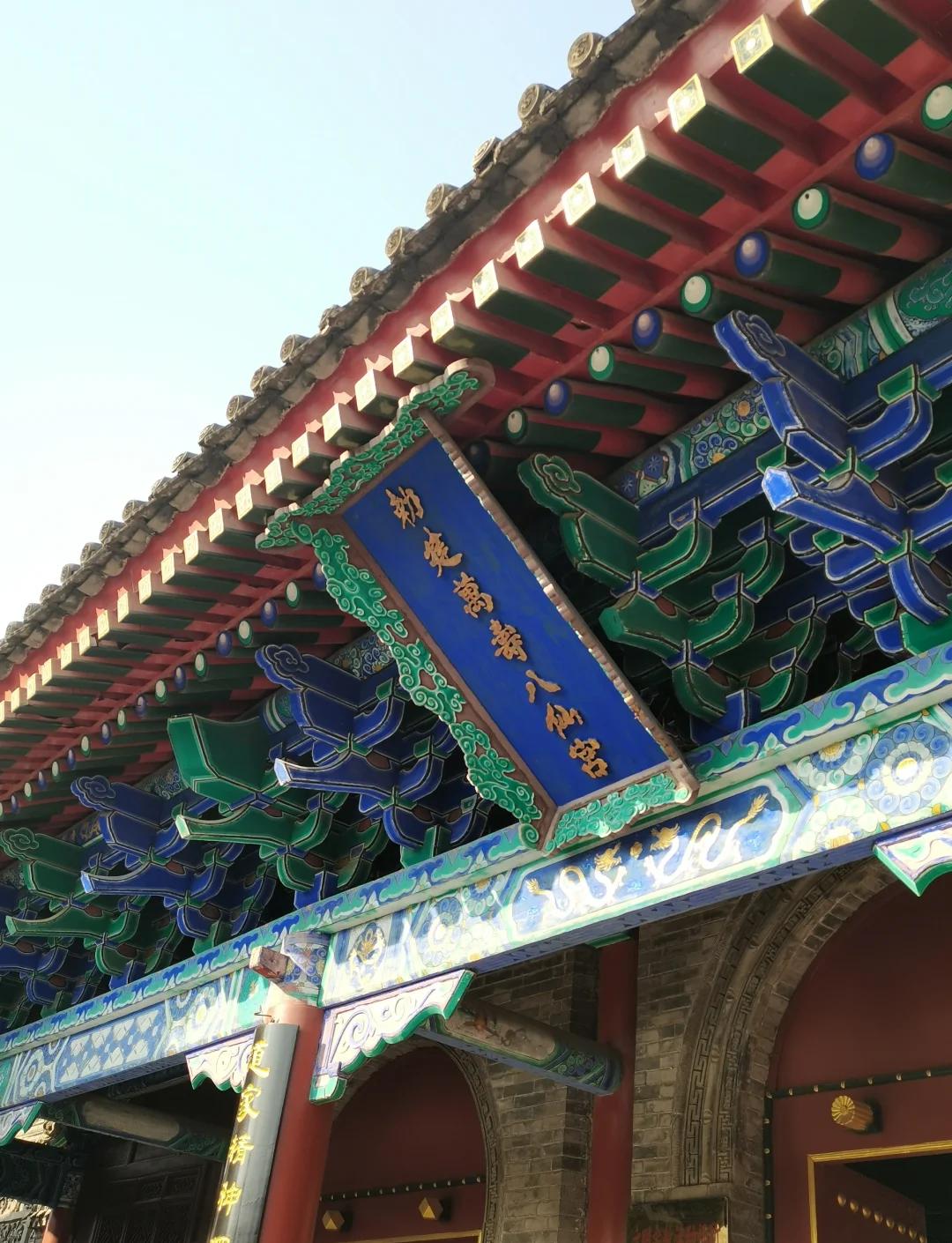
Explore the spiritual heritage of Xi’an through three remarkable Taoist sites, fascinating Chinese legends, and practical travel tips.
Xi’an is best known for the Terracotta Army, its ancient city walls, and its glorious history as the capital of several Chinese dynasties. Yet beyond these famous attractions lies another fascinating side of the city: its deep connection to Taoism, one of China’s oldest indigenous spiritual traditions.
From the legendary Eight Immortals to Laozi’s timeless philosophy and the origins of Quanzhen Taoism, Xi’an and its surrounding areas offer remarkable opportunities to explore Chinese religious history. Three destinations stand out: the Temple of the Eight Immortals, Louguantai, and Chongyang Palace. Each reveals a different aspect of Taoist culture through ancient architecture, historical figures, and stories passed down through generations.
1. Temple of the Eight Immortals: Eight Legendary Figures and the Pursuit of Good Fortune
Chinese Name: 八仙宫 (Bā Xiān Gōng)
Also Known As: Baxian Palace / Eight Immortals Temple
Address:No. 12 Beihuoxiang, Changlefang, Beilin District, Xi’an
Admission:Check the current price at the entrance
Opening Hours:Approximately 8:00 AM–6:00 PM in summer; 8:00 AM–5:00 PM in winter
Recommended Visit:1–1.5 hours
Best For: Taoist folklore, traditional architecture, and local culture
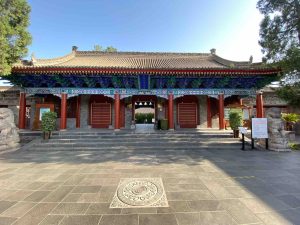
Located in eastern Xi’an, the Temple of the Eight Immortals is one of the city’s most important Taoist temples and an active center of the Quanzhen tradition. Also known as Baxian An, the temple has historical connections to the former Tang Dynasty palace grounds, although much of its surviving architecture dates to later rebuilding, particularly during the Qing Dynasty.
Unlike Xi’an’s grand imperial monuments, this temple offers a more intimate glimpse into everyday Chinese religious life. Visitors can explore traditional halls, observe local worshippers offering incense, and discover the fascinating mythology of the Eight Immortals.
The Eight Immortals: Why Didn’t They Simply Take a Boat?
According to Chinese folklore, the Eight Immortals were legendary figures with different personalities, backgrounds, and supernatural abilities. They included men and women, young and old, and people from different social classes.
One famous legend tells how the immortals decided to cross the sea without using a boat. Instead, each relied on a magical object or personal ability. Lü Dongbin wielded his sword, Tieguai Li used his mystical gourd, and Han Xiangzi was associated with his magical flute.
Their adventure inspired the Chinese saying “The Eight Immortals Cross the Sea, Each Displaying Their Own Powers” (八仙过海,各显神通).
Think of them as an ancient Chinese team of superheroes, each possessing a unique talent. The deeper message, however, is that everyone has their own strengths and can find different ways to overcome challenges.
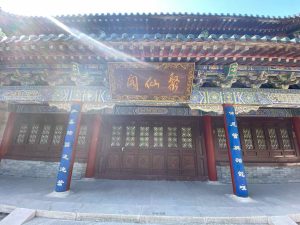
Lü Dongbin’s Dream: A Lifetime Before Dinner Was Ready
Lü Dongbin, one of the most celebrated immortals, is associated with a famous story known as The Yellow Millet Dream.
According to a popular version of the legend, a young Lü Dongbin dreamed of becoming a wealthy and powerful official. While resting at an inn, he fell asleep as a pot of millet was cooking. In his dream, he experienced an entire lifetime of success, marriage, political struggles, and eventual decline.
When he awoke, the millet was still cooking. Decades of imagined glory had passed in just a few moments.
The experience inspired him to question whether wealth and status were truly worth pursuing. In Taoist storytelling, the dream symbolizes the temporary nature of worldly success and the importance of inner wisdom.
Different historical versions of this story feature different characters, but its central lesson remains the same: a meaningful life cannot be measured by wealth or power alone.
An Imperial Connection: Empress Dowager Cixi
The temple also played a role in modern Chinese history. In 1900, following the invasion of Beijing by foreign forces, Empress Dowager Cixi and the Guangxu Emperor fled to Xi’an.
According to local historical records, Cixi later supported the temple’s restoration and granted it the name Wanshou Baxian Gong, meaning “Longevity Palace of the Eight Immortals.”
This connection makes the temple more than a place of mythology; it is also part of China’s late imperial history.
What to See
- Hall of the Eight Immortals: Statues and symbols associated with the legendary immortals.
- Lüzu Hall: Dedicated to Lü Dongbin, an important figure in Taoist tradition.
- Traditional Architecture: Qing-era halls, courtyards, and decorative gateways.
- Surrounding Streets: Local shops and traditional cultural markets.
Getting There
From Xi’an Xianyang International Airport (XIY):
Take Metro Line 14 to Xi’an North Railway Station, transfer to Line 2, then change to Line 1 at Beidajie Station. Exit at Kangfu Road Station, Exit B, and walk approximately five minutes. A taxi or private transfer usually takes around 40–70 minutes, depending on traffic.
From Xi’an North Railway Station:
Take Metro Line 2 to Beidajie, transfer to Line 1, and get off at Kangfu Road Station, Exit B. The temple is approximately a five-minute walk away.
2. Louguantai: Where Laozi’s Legendary Journey Changed Chinese Philosophy
Chinese Name: 楼观台 (Lóu Guān Tái)
Also Known As: Louguan Terrace / Louguantai Taoist Site
Address:Louguan Town, Zhouzhi County, Xi’an, Shaanxi
Admission:Fees vary between scenic and heritage areas
Opening Hours:Check the current schedule for the specific attraction
Recommended Visit:2–4 hoursBest ForLaozi, Taoist philosophy, history, and nature
Best For:Laozi, Taoist philosophy, history, and nature

Situated at the northern foot of the Qinling Mountains in Zhouzhi County, Louguantai is one of China’s most historically significant Taoist cultural sites. Surrounded by forests and mountain scenery, it is traditionally associated with Laozi, the ancient Chinese philosopher credited with the Tao Te Ching (Daodejing).
This influential text, consisting of roughly 5,000 Chinese characters, explores harmony with nature, simplicity, humility, and the Tao — often translated as “the Way.”
Louguantai is particularly meaningful to visitors interested in understanding the philosophical foundations of Taoism.
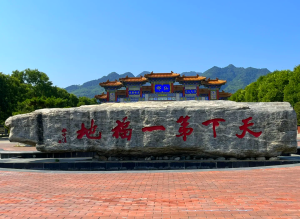
The Purple Cloud Legend: How a Gatekeeper Recognized Laozi
One of the best-known legends surrounding Laozi is called Purple Qi Comes from the East (紫气东来).
According to tradition, Laozi decided to leave the Zhou kingdom and travel westward. At Hangu Pass, a gatekeeper named Yin Xi noticed an unusual purple glow appearing in the eastern sky. Believing it signaled the arrival of a great sage, he waited for the mysterious traveler.
Soon, Laozi appeared, riding a greenish-blue ox. Yin Xi recognized his wisdom and persuaded him to record his teachings before continuing his journey.
Laozi reportedly wrote approximately 5,000 characters, which later became known as the Tao Te Ching. Afterward, he traveled west and disappeared from the legendary narrative.
Imagine a border official persuading one of history’s greatest philosophers to write down his ideas before leaving civilization behind.
Although the story is legendary rather than verified history, it remains central to Taoist cultural tradition. Louguantai’s own heritage connects Yin Xi and Laozi with the teaching of these philosophical principles.
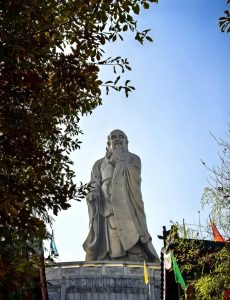
Why Did Laozi Compare Wisdom to Water?
One of the most memorable teachings in the Tao Te Ching is “The highest goodness is like water” (上善若水).
Water appears soft and yielding, yet it can gradually shape mountains, nourish living things, and flow around seemingly impossible obstacles.
For Laozi, true strength does not always come from force or confrontation. Flexibility, patience, and adaptability can be equally powerful.
Consider a river meeting a giant rock. Instead of fighting the obstacle, the water flows around it and continues its journey.
This simple image captures an essential Taoist principle: living in harmony with nature can be more effective than constantly struggling against it.
Surrounded by the Qinling Mountains, Louguantai offers a particularly fitting setting for reflecting on this philosophy.
Why Did Laozi Ride an Ox Instead of a Horse?
Traditional Chinese paintings frequently depict Laozi riding a greenish-blue ox rather than a horse.
While horses were often associated with speed, warfare, and political power, the ox came to symbolize patience, simplicity, and quiet strength.
This contrast reflects the philosophical values commonly associated with Laozi: humility, restraint, and freedom from unnecessary ambition.
The image is symbolic rather than a historically verified detail, but it remains one of the most recognizable representations of Laozi in Chinese art.
What to See
- Sutra Preaching Terrace (Shuojing Tai): Traditionally associated with Laozi’s teachings.
- Laozi Shrine: Religious buildings honoring Laozi.
- Zongsheng Palace Heritage Area: Historic remains connected to the Louguan Taoist tradition.
- Qinling Mountain Scenery: Forests, peaceful surroundings, and natural landscapes.
From Xi’an Xianyang International Airport (XIY):
Travelers may first reach the Giant Wild Goose Pagoda North Square and transfer to the Mountain Ring Tourist Bus No. 1 (环山旅游1号线) toward Louguantai, subject to current service availability. Direct airport buses to the square and tourist bus schedules should be confirmed in advance. Alternatively, a taxi or private transfer takes approximately 1.5–2 hours.
From Xi’an North Railway Station:
Take Metro Line 2 toward Weiqunan Station, then arrange onward transport to Louguantai. Direct transfers to Tourist Bus No. 1 at Weiqunan have not been confirmed, so check the latest operating stops before traveling. A private transfer generally takes around 1.5–2 hours.
Travel Tip:
Tourist bus services may be limited on weekdays. For international visitors unfamiliar with local transport, booking a private driver is often the most convenient option. Louguantai covers several heritage and scenic areas, so confirm your exact destination before departure.
3. Chongyang Palace: The Taoist Master Who Lived in His Own Tomb
Chinese Name: 重阳宫 (Chóng Yáng Gōng)
Also Known As: Chongyang Palace / Chongyang Taoist Temple
Address: Zu’an Town, Huyi District, Xi’an, Shaanxi
Admission: Check the current price at the entrance
Opening Hours: Confirm temple and stele forest access before visiting
Recommended Visit: 1–2 hours
Best For: Quanzhen Taoism, Chinese history, and martial arts culture
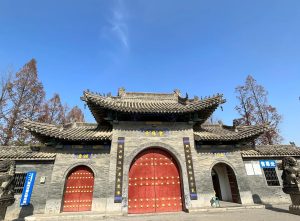
Located in Zu’an Town, Huyi District, Chongyang Palace is one of the ancestral centers of Quanzhen Taoism, a major school of Chinese Taoism founded by Wang Chongyang during the 12th century.
Unlike legendary immortals celebrated for supernatural powers, Wang Chongyang emphasized self-discipline, moral cultivation, meditation, and freedom from excessive worldly desires.
The temple preserves important historical monuments and stone inscriptions associated with the development of Quanzhen Taoism.
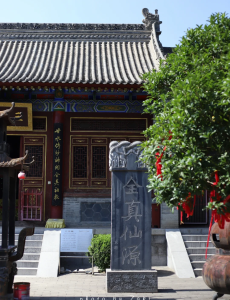
The Living Dead Tomb: Why Did Wang Chongyang Bury Himself?
One of the most unusual stories about Wang Chongyang concerns a structure he called the Tomb of the Living Dead (活死人墓).
According to Quanzhen tradition, Wang constructed an underground chamber resembling a tomb and used it as a place of spiritual retreat.
His intention was not to die, but to symbolically abandon his former attachment to wealth, reputation, and social ambition.
The name “Living Dead” represented the death of his old worldly identity and the beginning of a new spiritual life.
For Western visitors, this practice may resemble the extreme solitude chosen by certain medieval Christian hermits, who withdrew from society to focus on prayer and spiritual discipline.
Interestingly, the Tomb of the Living Dead also appears in Chinese popular culture. In Jin Yong’s famous martial arts novel The Return of the Condor Heroes, it becomes the home of a fictional martial arts school.
The fictional tomb should not be confused with the historical religious tradition, but the connection makes Wang Chongyang’s story particularly interesting to fans of Chinese martial arts literature.
The Seven Masters Who Spread Quanzhen Taoism
Wang Chongyang’s seven most famous disciples became known as the Seven Masters of Quanzhen.
They were Ma Yu, Tan Chuduan, Liu Chuxuan, Qiu Chuji, Wang Chuyi, Hao Datong, and Sun Bu’er.
Among them was Sun Bu’er, a female Taoist master whose prominence reflects the participation of women in the development of Quanzhen religious traditions.
These disciples helped spread Wang’s teachings across northern China, establishing Quanzhen Taoism as one of the country’s most influential religious movements.
A Taoist Master Meets Genghis Khan
One of the most remarkable historical episodes involving the Seven Masters concerns Qiu Chuji and Genghis Khan.
In the early 13th century, Qiu Chuji, already an elderly Taoist master, undertook an extraordinary journey across Central Asia after receiving an invitation from the Mongol ruler.
Genghis Khan was interested in longevity and hoped the master could offer guidance on extending human life.
Rather than presenting a magical elixir of immortality, Qiu emphasized moderation, self-discipline, and a balanced way of living.
Historical accounts also describe his efforts to encourage the ruler to reduce unnecessary killing.
The encounter presents a fascinating contrast: one of history’s most powerful conquerors sought the secret of eternal life from an elderly Taoist, whose teachings focused on controlling desire rather than gaining supernatural powers.
It remains one of the most memorable examples of Taoist thought intersecting with world history.
What to See
- Main Temple Halls: Traditional religious architecture associated with Quanzhen Taoism.
- Zu’an Stele Forest: An important collection of historical stone inscriptions and calligraphy.
- Wang Chongyang Memorial Sites: Buildings and monuments honoring the school’s founder.
- Taoist Heritage: Cultural relics connected to the Seven Masters and their teachings.
Getting There
From Xi’an Xianyang International Airport (XIY):
Travel toward Huyi District (formerly Hu County), then transfer to local transport serving Zu’an Town. Bus routes 806 and 901 may be useful depending on their current operating routes; confirm stops and schedules before departure. A direct taxi or private transfer generally takes approximately 1–1.5 hours.
From Xi’an North Railway Station:
Take the metro or a local bus toward Xi’an South Bus Station (Chengnan Bus Station), where you can check for intercity coaches to Huyi District. From Huyi Bus Station, continue by local bus or taxi to Chongyang Palace in Zu’an Town. Alternatively, book a direct private transfer to avoid multiple connections.
Travel Tip:
Public transportation to Zu’an Town may involve several transfers, and rural bus schedules can change. A private driver is recommended for visitors with limited time.
Practical Tips for International Visitors
Taoism and Buddhism are different traditions. Although both have influenced Chinese culture for centuries, Taoism developed in China and emphasizes harmony with the Tao, nature, and spiritual cultivation, while Buddhism originated in ancient India.
Respect active religious sites. Many Taoist temples remain places of worship. Speak quietly, avoid interrupting ceremonies, and follow photography restrictions.
You do not need to be Taoist to visit. These temples welcome cultural exploration and offer valuable insights into Chinese history, philosophy, architecture, and art.
Use Chinese addresses for navigation. Amap (Gaode Maps) is widely used in China and can be helpful when traveling to less-visited sites. Save the Chinese names of your destinations before departure.
Plan ahead for suburban attractions. Louguantai and Chongyang Palace are outside central Xi’an, and public transport may require multiple connections. Confirm current routes, opening hours, and admission arrangements before traveling.