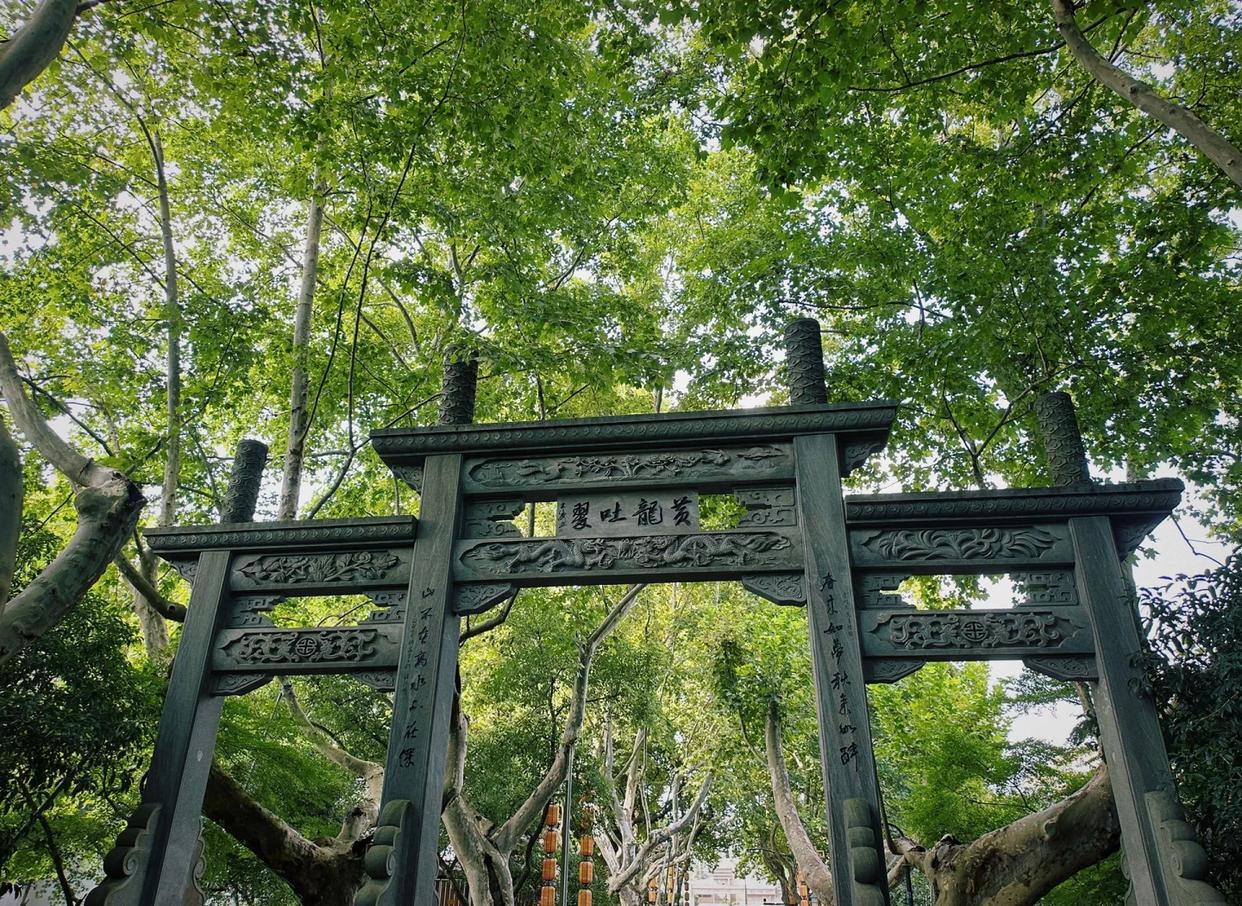
Amid the scenic landscapes of West Lake, Taoist traditions have flourished for centuries. Ancient temples lie tucked away in the mountains, while traces of legendary immortals linger along the lakeshore. Baopu Taoist Temple, Huanglong Cave, and Fuxing Temple on Yuhuang Mountain are collectively known as the Three Great Taoist Temples of West Lake.
Immersed in Hangzhou’s misty Jiangnan scenery, these sacred sites preserve centuries of Taoist heritage while carrying a wealth of fascinating folklore and local legends. Once you arrive in Hangzhou, a journey to these secluded temples offers a wonderful opportunity to experience the city’s spiritual traditions, natural beauty, and distinctive Taoist culture.
Baopu Taoist Temple — Geling Hill
Address: 16 Geling Road, Xihu District, Hangzhou
Opening Hours: 8:00 AM–5:00 PM
Admission: RMB 5
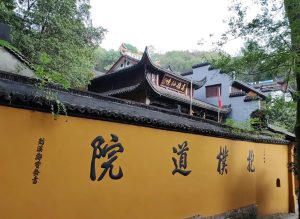
Baopu Taoist Temple is nestled halfway up Geling Hill, within the West Lake Cultural Landscape, a UNESCO World Heritage Site. It is also home to the Hangzhou Taoist Association.
During the Eastern Jin Dynasty (317–420), the renowned Taoist scholar and alchemist Ge Hong, also known as Baopuzi, is said to have lived here in seclusion, gathering medicinal herbs, studying medicine, and practicing Taoist alchemy. He devoted considerable attention to medical research and treated local residents, later leaving behind the influential medical work Emergency Prescriptions Kept Up One’s Sleeve (Zhouhou Beiji Fang). The text would continue to influence Chinese medicine for centuries and later provide important inspiration for modern medical research.
The temple was subsequently established in memory of Ge Hong. During the Southern Song Dynasty, the area was once associated with the residence of powerful official Jia Sidao, while the nearby Red Plum Pavilion is linked to a poignant classical legend.
From the temple’s elevated terrace, visitors can enjoy sweeping views across West Lake.
Getting There
From Hangzhou Xiaoshan International Airport:
Take Metro Line 7 and transfer to Line 3, getting off at Huanglong Station. From there, take a taxi to the Geling Hill entrance on Beishan Road and continue uphill on foot. Approximate journey time: 1.5 hours.
From Hangzhou East Railway Station:
Take Metro Line 1 to Longxiangqiao Station, then take a taxi to Geling Hill on Beishan Road and walk up the stone steps to the temple. Approximate journey time: 40 minutes.
Huanglong Cave — Huanglong Yuanyuan Taoist Temple
Address: 69 Shuguang Road, Xihu District, Hangzhou
Opening Hours: 8:00 AM–5:30 PM
Admission: RMB 15 for adults
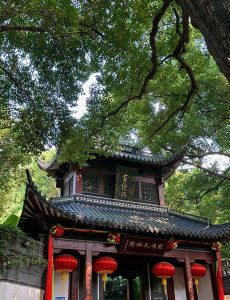 Located at the northern foot of Qixia Ridge, Huanglong Cave forms part of the scenic area known as “Yellow Dragon Spitting Green” (Huanglong Tucui), one of Hangzhou’s celebrated landscapes. Surrounded by lush bamboo groves, the site is famous for a mountain spring that flows from the mouth of a carved stone dragon.
According to local legend, a yellow dragon once emerged from a cave here during the Tang Dynasty and soared into the sky, giving the site its name. In ancient times, local communities would also come here to pray for rain during periods of drought.
Over the centuries, Huanglong Cave developed into a popular place of prayer and blessing. Today, it is particularly well known among visitors seeking good fortune in love and relationships. Prayer plaques and wishes can be seen throughout the grounds, while the Taoist temple remains quietly nestled among bamboo and woodland, creating an atmosphere that is both tranquil and warmly connected to everyday life.
Getting There
From Hangzhou Xiaoshan International Airport:
Take Metro Line 7 and transfer to Line 3. Get off at Huanglong Cave Station and walk for approximately 10 minutes. Approximate journey time: 1 hour 40 minutes.
From Hangzhou East Railway Station:
Take Metro Line 3 directly to Huanglong Cave Station, followed by a walk of just over 10 minutes. Approximate journey time: 35 minutes.
Fuxing Taoist Temple — Yuhuang Mountain
Address: Yuhuang Mountain Summit, Shangcheng District, Hangzhou
Opening Hours: 7:30 AM–5:00 PM
Admission: RMB 10 for the Yuhuang Mountain Scenic Area; admission to Fuxing Temple is included.
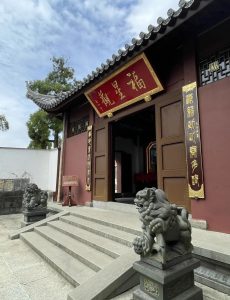
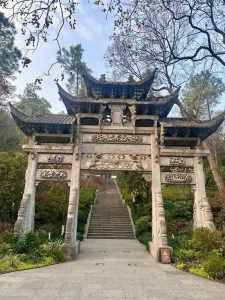 Perched near the summit of Yuhuang Mountain, Fuxing Taoist Temple traces its origins back to the Tang Dynasty and is regarded as an important Quanzhen Taoist temple in the Jiangnan region. Its elevated location offers panoramic views of both West Lake and the Qiantang River.
According to legend, during the Tang Dynasty, local residents once encountered a mysterious Taoist priest on the mountain who vanished without a trace moments later. A temple was subsequently established here in remembrance of the extraordinary encounter.
In the Republican era, Taoist priest Li Lishan became remembered for his compassion during a period of war and turmoil. He opened the temple to shelter large numbers of displaced civilians and established a school to provide assistance and education for children.
Beyond the temple itself, Yuhuang Mountain is surrounded by several notable natural and cultural attractions, including Zilai Cave and the historic Eight-Diagram Field (Bagua Tian).
 Getting There
From Hangzhou Xiaoshan International Airport:
Take Metro Line 7 and transfer to Line 4, getting off at Shuichengqiao Station. From there, take a taxi up Yuhuang Mountain. Approximate journey time: 1 hour 50 minutes.
From Hangzhou East Railway Station:
Take Metro Line 4 to Shuichengqiao Station, then continue by taxi up the mountain. Alternatively, visitors can hike to the temple from the Bagua Tian entrance. Approximate journey time: 50 minutes.
Travel Tip: The three Taoist sites can be combined into a single cultural itinerary around West Lake. Baopu Taoist Temple requires an uphill walk, so comfortable walking shoes are recommended. Opening hours may vary slightly during public holidays and special occasions, so it is advisable to check the latest information before your visit.