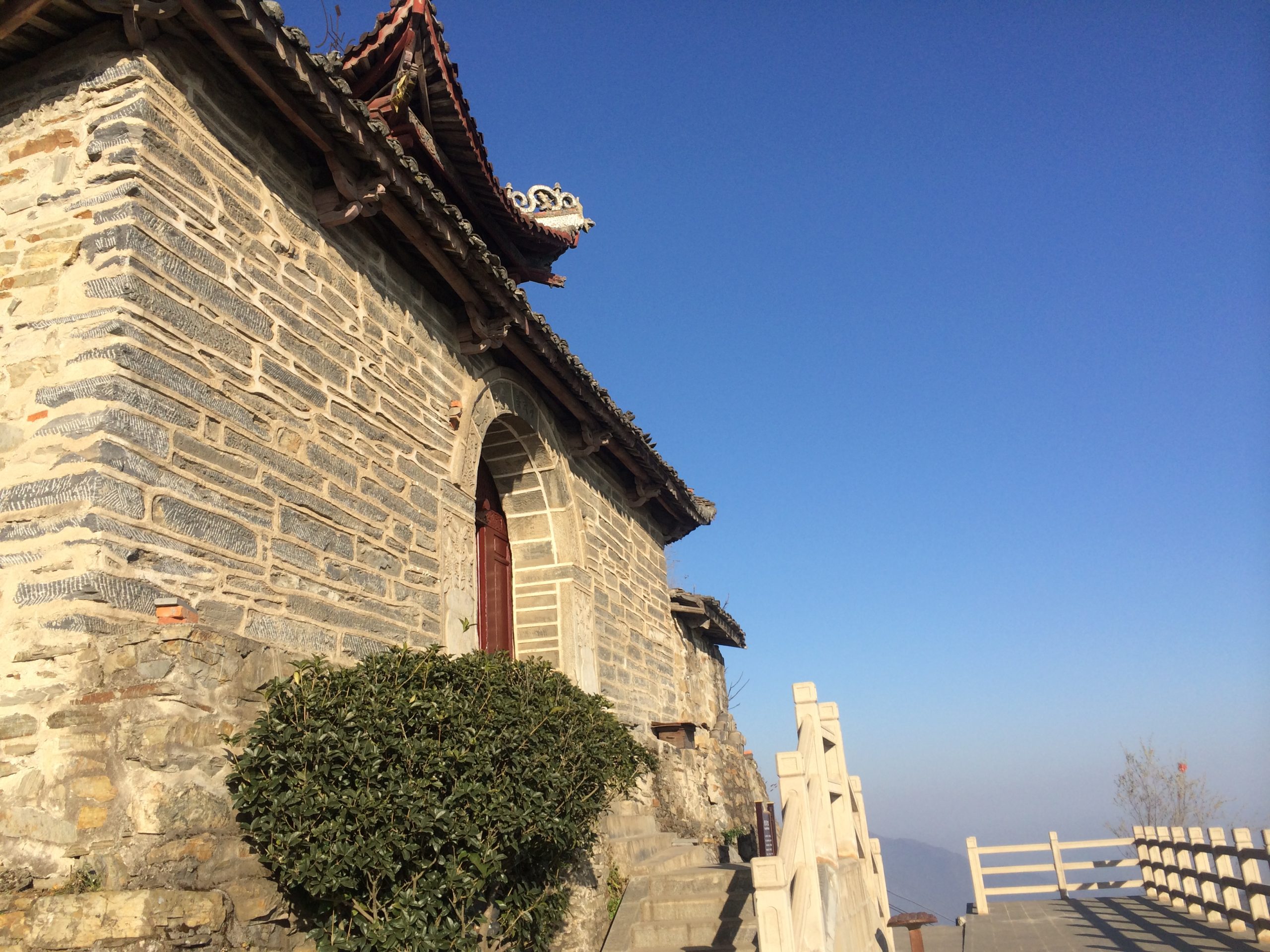
Visiting a Taoist temple in China is quite different from visiting an ordinary historic building or tourist attraction.
A Taoist temple may be a centuries-old—or even thousand-year-old—historic site, but it may also still be an active religious space where Taoist priests practice, perform rituals, and welcome worshippers.
You do not need to be a Taoist to visit, nor do you need to look for a mysterious or spiritual experience. Simply slow down. Admire the architecture, listen to the temple bells, offer incense if you wish, or quietly walk through the courtyards. Any of these can be a meaningful way to experience and understand Chinese Taoist culture.
1. Explore the Temple Architecture
Traditional Taoist temples in China are often built to follow the natural landscape or arranged along a central axis. Common structures include the main entrance gate, Lingguan Hall, the Hall of the Three Pure Ones, the Jade Emperor Hall, and bell and drum towers.
Architectural styles also vary from region to region. Taoist temples in northern China tend to have a more formal and symmetrical layout, while those in the Jiangnan region of southern China are often integrated into mountains, forests, springs, and classical gardens. Around Hangzhou’s West Lake, for example, some Taoist temples are an integral part of the surrounding lake-and-mountain scenery.
As you explore, look closely at the layout of the halls, decorative roof figures, inscribed plaques and couplets, stone carvings, ancient steles, and statues of Taoist deities. Many details that may seem purely decorative are actually connected to traditional Chinese concepts such as yin and yang, the Five Elements, the Eight Trigrams, and Taoist beliefs about immortals and deities.
Take your time walking through the courtyards, halls, and covered corridors. Traditional timber architecture, stone inscriptions, ancient trees, and quiet gardens all contribute to the distinctive atmosphere and spirit of a Taoist temple.
2. Learn About Taoist Deities and Immortals
One of the first questions many visitors have when entering a Taoist temple is:
Who are all the figures worshipped here?
Taoism has a vast and complex pantheon, and different temples may honor different deities. Common figures include the Three Pure Ones (Sanqing), Jade Emperor, Zhenwu the Great, Lü Dongbin (Lüzu), the God of Wealth, and Wenchang Dijun, who is traditionally associated with literature, education, and scholarly achievement.
Some local temples also worship deities closely connected with the history, mountains, rivers, legends, or folk traditions of the surrounding area.
If the temple has information boards, take some time to read them. Learning the story of a single Taoist deity can often introduce you to a chapter of Chinese history, a local folk tradition, or even the cultural heritage of an entire city.
3. Offer Incense and Pray for Blessings
Offering incense is one of the most common activities at Taoist temples.
People may pray for health and safety, success in their studies or careers, a happy relationship, or harmony within the family. Some temples have also become particularly associated with certain types of blessings because of their history and traditions.
However, offering incense is never required simply because you are visiting a Taoist temple. If you are there as a traveler, it is perfectly acceptable not to do so.
If you would like to take part, follow the temple’s instructions. Some temples provide incense, while others limit the number of incense sticks for fire safety or environmental reasons. Always follow the rules of the individual temple.
What matters is not how much incense you burn, but the respect and sincerity behind the gesture. Traditionally, prayer is less about making extravagant wishes and more about approaching the moment with sincerity, kindness, and a peaceful state of mind.
4. Pay Respect and Make a Wish
In halls that are open for worship, you may see visitors bowing before statues of deities and silently making wishes or offering prayers.
If you are unfamiliar with Taoist etiquette, there is no need to imitate complicated rituals. Simply remain quiet and respectful and follow the rules of the temple.
If you would like to participate more formally, look for signs explaining the proper etiquette or politely ask a member of staff or a Taoist priest for guidance.
There is also no need to say your wish aloud. In Chinese tradition, people often prefer to silently state their name and what they are hoping or praying for.
5. Try Traditional Fortune Sticks
Some Taoist temples maintain the traditional practice of drawing fortune sticks, often known in Chinese as qiuqian (求签).
Not every Taoist temple offers this practice, and the procedure can vary from place to place. At some temples, visitors first pay their respects before shaking a container filled with numbered bamboo sticks until one falls out. The number corresponds to a written fortune, which may then be interpreted.
If you would like to try it, first check whether it is an official service provided by the temple. Be cautious of people around tourist areas who aggressively offer expensive fortune-telling, “luck changing,” or similar services.
For travelers, fortune sticks can simply be enjoyed as an interesting way to learn about traditional Chinese folk customs and beliefs.
6. Get Amulets, Blessing Pouches, or Souvenirs
Larger Taoist temples may have a temple shop or cultural store where visitors can obtain items such as protective amulets, blessing pouches, pendants, bracelets, books, and Taoist-inspired cultural products.
Traditions vary from temple to temple. Some objects may have a specific religious purpose, while others are primarily designed as cultural souvenirs.
If you are unsure about the meaning or proper use of an item, simply ask the temple staff. There is no need to worry about accidentally “getting the rules wrong.”
7. Collect Temple Stamps
Some Taoist temples offer souvenir stamps that can be placed on postcards, travel journals, or dedicated stamp-collection books.
Designs may feature temple architecture, the Eight Trigrams, gourds, cranes, Taoist immortals, or other elements of local culture. For travelers, collecting these stamps can be a fun and memorable way to record a visit.
However, it is important to understand that souvenir stamps are not the same as official Taoist ritual seals. Religious seals and ritual objects should never be touched or used without permission.
8. Talk with a Taoist Priest
If you meet a Taoist priest who is open to conversation, you may politely ask about Taoist culture, the history of the temple, or life at the temple.
For example:
“When was this temple first established?”
“Which deity is mainly worshipped here?”
“Does this hall have any special history?”
Questions like these are generally more appropriate than asking about private matters such as a priest’s personal religious practice, income, or marital life.
If a priest is chanting scriptures, performing daily religious practice, assisting worshippers, or clearly occupied, avoid interrupting them.
9. Observe Taoist Rituals and Traditional Ceremonies
During certain festivals, the birthdays of important Taoist deities or masters, and other significant occasions, some temples hold traditional ceremonies involving scripture chanting, prayers, blessings, and jiao rituals.
For visitors, these occasions offer a rare opportunity to experience traditional Taoist music, ceremonial clothing, ritual etiquette, and religious culture firsthand.
When observing a ceremony, stay within designated visitor areas. Do not enter ritual spaces without permission, and avoid blocking worshippers or Taoist priests simply to take photographs.
10. Do Nothing—Just Walk Around
Sometimes, this may be the most enjoyable way to experience a Taoist temple in China.
Many ancient temples are hidden among mountains and forests. Old trees shade peaceful courtyards, stone steps wind quietly between halls, incense smoke drifts through the air, and occasionally you may hear the sound of bells or ritual chimes.
You do not have to burn incense, draw a fortune stick, or make a wish.
Simply walk through the courtyards. Sit beneath an old tree for a while. Look at the mountains, listen to the wind, or stop to read an ancient stone inscription.
Taoism places great importance on living in harmony with nature and allowing things to follow their natural course.
Sometimes, the most meaningful thing you can do in a Taoist temple is simply to let go of the idea that you have to do something at all.