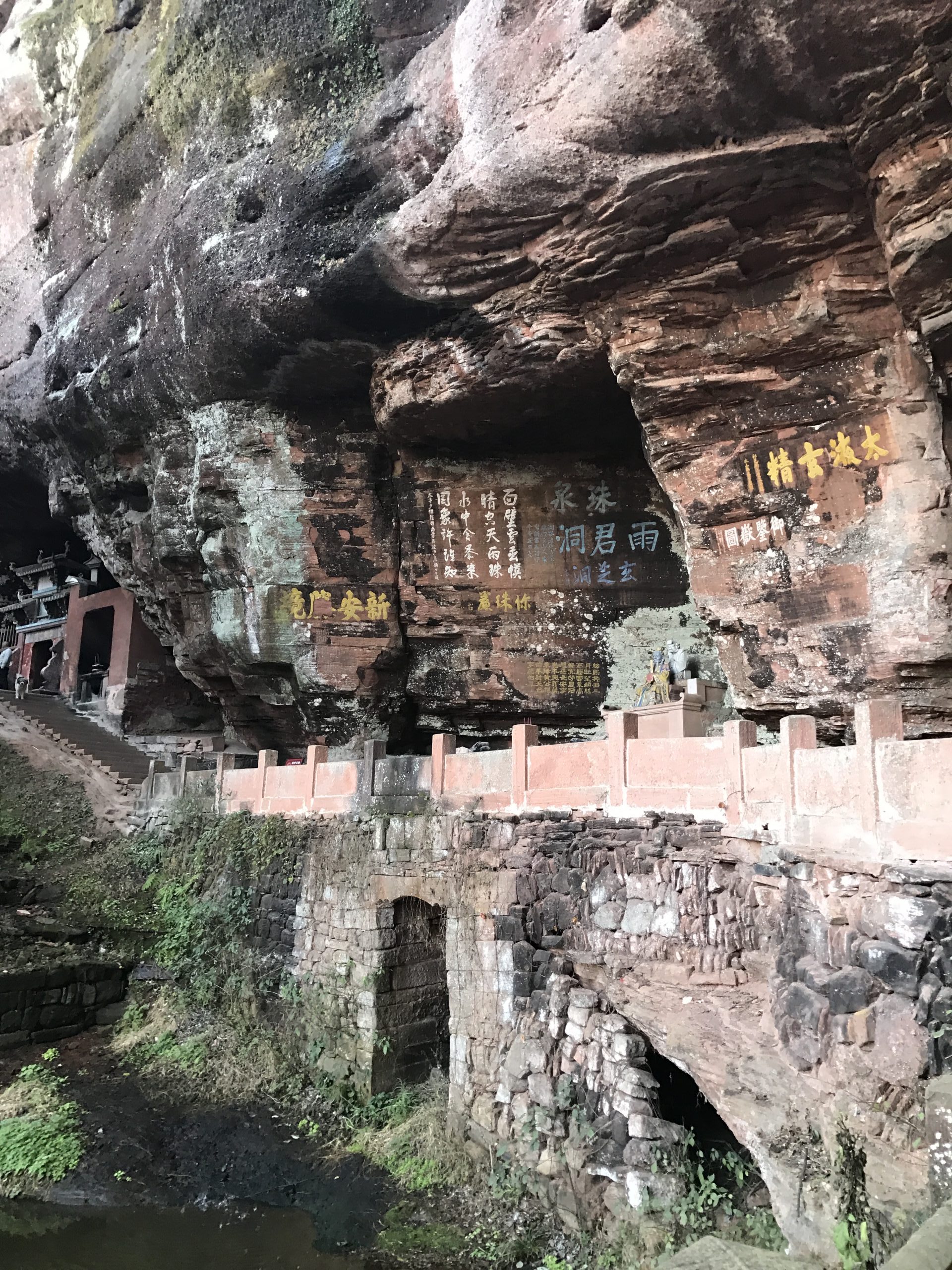
Chinese Taoist temples are both important parts of China’s cultural heritage and active places of religious practice.
If you are visiting a Taoist temple in China for the first time, there is no need to worry too much about unfamiliar customs or religious etiquette. In most cases, simply being respectful, quiet, and mindful of the temple’s rules is more than enough.
That said, knowing a few basic guidelines beforehand can make your visit feel more natural and comfortable.
1. Check the Temple Rules Before Entering
Rules can vary from one Taoist temple to another. Some are primarily active religious sites, while others also operate as tourist attractions. Some may even be located within nature reserves or protected cultural heritage areas.
As a result, policies regarding admission fees, opening hours, photography, incense burning, and visitor access may differ. Before entering, take a moment to read any visitor information or notices posted at the entrance.
Opening hours and visitor routes may also change temporarily during Chinese New Year, Taoist festivals, and Chinese public holidays.
2. Dress Neatly and Appropriately
Most Taoist temples do not have a strict dress code, but since they are religious spaces, visitors are encouraged to dress neatly and respectfully. Normal travel clothes are generally fine.
If you plan to enter the main halls, attend a formal religious event, or speak with Taoist priests, it is best to avoid clothing that is overly revealing or clearly inappropriate for a place of worship.
If the temple is located in the mountains, comfortable shoes with good grip are even more important.
Many of China’s famous Taoist temples were built on mountainsides—so before you even start thinking about temple etiquette, you may first have to deal with a very long flight of stone steps.
3. Keep Your Voice Down Inside the Main Halls
When entering the main halls, lower your voice and maintain a peaceful atmosphere.
Avoid loud conversations, playing music, running around, or causing unnecessary disturbance. Try not to hold lengthy conversations near people who are praying or worshipping.
If Taoist priests are chanting scriptures or conducting a religious ceremony, you may quietly observe from areas open to visitors. Do not walk through or interfere with the ceremonial space.
4. Do Not Touch Statues or Ritual Objects
Religious statues, altars, incense burners, ritual instruments, and other sacred objects should not be touched without permission.
You may come across intriguing objects such as ritual swords, seals, command tablets, bells, or stone chimes. However interesting they may look, do not pick them up or handle them yourself.
Some parts of a temple are reserved for the daily life, religious practice, or ceremonies of Taoist priests. If you see signs such as “Staff Only,” “No Visitors,” or “Restricted Area,” respect those boundaries.
5. Check Before Taking Photos
This is one of the most important things to keep in mind when visiting a Taoist temple in China.
Do not assume that photography is allowed everywhere.
Photography is often permitted in courtyards and around the exterior of temple buildings. However, photography, video recording, or livestreaming may be prohibited inside the main halls, around sacred statues, during religious ceremonies, or when Taoist priests and practitioners are present.
The easiest approach is to look for signs indicating whether photography is allowed. If you would like to take a close-up photo of a Taoist priest, it is polite to ask for permission first.
6. There Is No Need to Burn Large Amounts of Incense
If you would like to offer incense, follow the rules and instructions of the temple you are visiting.
Incense customs can vary between regions and temples, so there is no need to treat one method you have seen online as the universal “correct” way to worship at every Taoist temple.
More incense does not mean more blessings. Three sticks of incense are commonly used, and there is no need to burn large bundles or oversized incense sticks. If the incense catches fire, gently fan out the flame with your hand rather than blowing it out with your mouth.
When making a wish or prayer, sincerity matters more than extravagance. There is no need to compete with others or make excessive displays. Taoist traditions place greater emphasis on cultivating virtue, doing good, and living in harmony with the natural course of life.
For fire safety and environmental reasons, many temples limit the amount of incense visitors may burn or prohibit visitors from bringing large incense sticks and candles from outside. Always follow the temple’s own regulations.
7. If You Do Not Know the Proper Rituals, Do Not Force Yourself to Copy Others
It is completely normal for a first-time visitor not to know how to perform Taoist greetings or worship rituals.
Rather than hurriedly copying the people around you, simply remain respectful and quiet. If you would like to worship more formally, you can ask a staff member or Taoist priest for guidance.
Taoist etiquette has its own traditions, and practices may vary depending on the occasion. For this reason, it is not a good idea to learn a few gestures from short videos online and assume they apply to every temple and every situation.
For an ordinary visitor, showing respect is more important than performing every gesture perfectly.
8. Be Respectful When Talking About Deities and Religious Beliefs
Taoist statues and images have a distinctive style rooted in traditional Chinese art. As a first-time visitor, you may naturally be curious about the clothing, expressions, ritual objects, or even the names of certain deities.
Curiosity is perfectly fine, but avoid making mocking or disrespectful comments. Likewise, do not photograph or make fun of people who are praying or worshipping.
You do not have to follow a religion to respect it. When entering a place of worship, showing respect for local beliefs is simply part of being a considerate traveler.
9. Be Cautious About Fortune-Telling, “Disaster Prevention,” and Expensive Services
Established Taoist temples may offer cultural items, blessing ceremonies, or other religious services. The exact arrangements and fees should be based on information provided by the temple itself.
Be cautious if strangers outside or around a tourist area approach you with claims such as, “I can see something bad in your fortune,” or “You need to fix this immediately,” and then pressure you into paying a large amount of money.
Do not allow fear of supposed “bad luck” to pressure you into spending money.
If you are genuinely interested in a blessing ceremony, religious service, or cultural activity, ask at the temple’s official information or service desk.
10. Respect the Privacy of Taoist Priests
Taoist priests are not part of the tourist attraction—they are people living, studying, practicing their religion, and working within the temple.
Do not enter their living quarters without permission or follow them around taking photos. If you would like to take a photo together, ask politely. If they decline, respect their decision.
When speaking with a Taoist priest, topics such as Taoist culture, the history of the temple, and local traditions are generally natural subjects of conversation. Questions about their private lives, however, should be approached with appropriate sensitivity.
11. Help Protect Historic Buildings and the Natural Environment
Many Taoist temples in China are historic buildings, and some are officially protected cultural heritage sites.
Do not carve or write on walls, ancient trees, stone tablets, or other structures. Avoid climbing on buildings, crossing barriers, or touching fragile historic objects.
If the temple is located in a forested or mountainous area, fire safety is especially important. Do not smoke, light fires in unauthorized areas, or leave burning incense or candles unattended.
Dispose of your rubbish in designated bins or take it with you when you leave.
12. The Most Important Rule: Respect the Life That Already Exists Here
To a traveler, a Taoist temple may be a fascinating sightseeing destination. To others, however, it is a genuine place of worship, spiritual practice, and everyday religious life.
That is why you do not need to memorize a complicated list of taboos before visiting a Taoist temple in China.
Keep your voice down, avoid causing offense, do not touch things without permission, do not disturb others, and always check before taking photos or entering restricted areas.
Follow these simple principles, and you will be able to visit most Taoist temples in China comfortably and respectfully.
And there is much more to a Taoist temple visit than burning incense, seeking blessings, or taking photos.
Once you begin to notice why a particular hall was built where it stands, what the calligraphy on a traditional couplet means, why a certain deity has been worshipped by local communities for centuries, and how Chinese culture understands mountains, water, nature, life, and the concept of the Dao, you begin to see something beyond an ancient temple.
You begin to discover a living part of Chinese culture—one that has continued to the present day.