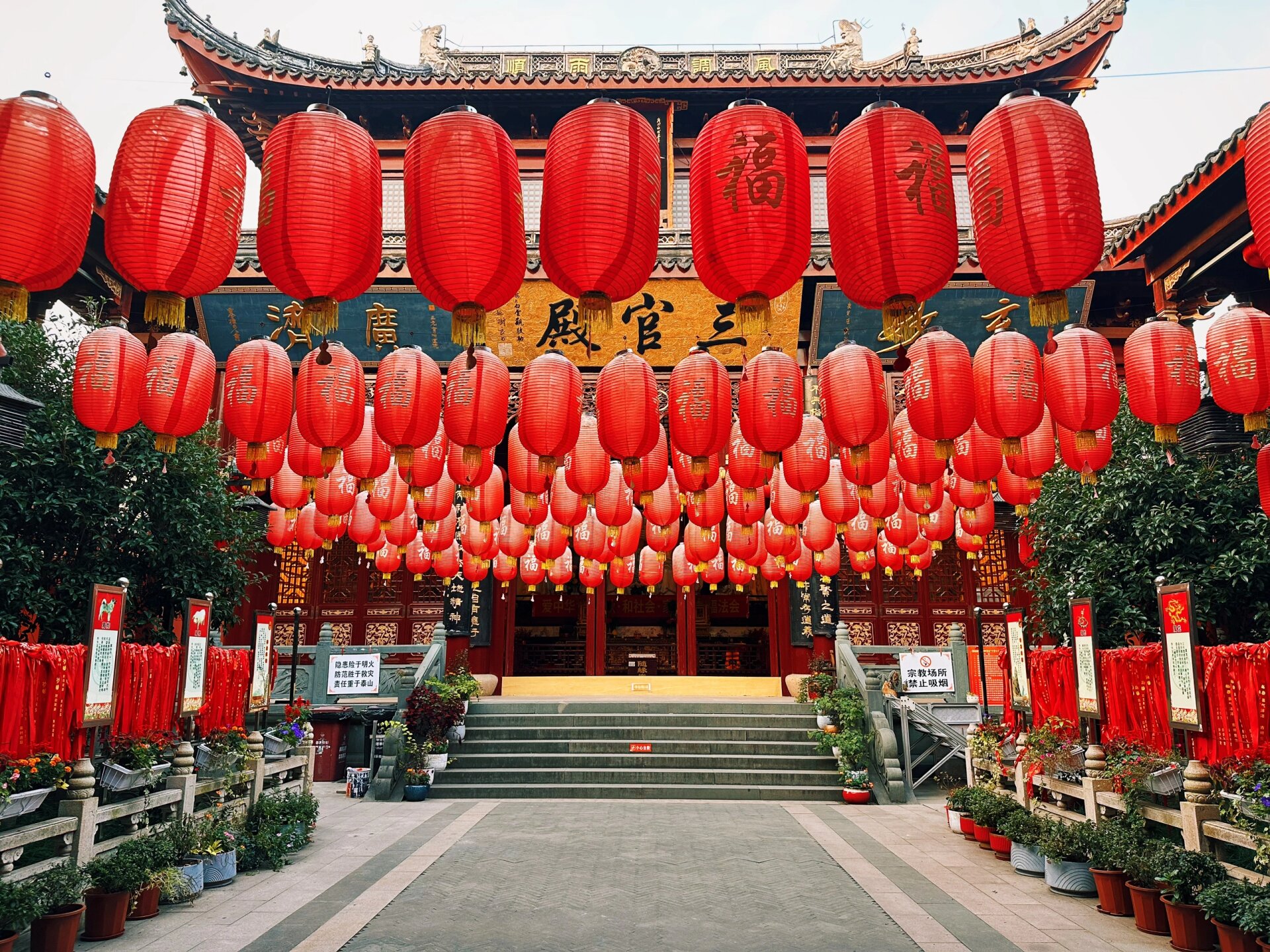
In the bustling Pudong district of Shanghai, just a short walk from Jinxiu Road Station on Metro Line 7, lies a unique and tranquil Taoist temple — Sanyuan Taoist Temple (Sanyuan Gong Kun Dao Yuan).
As one of Shanghai’s few Quanzhen Taoist temples for female practitioners, Sanyuan Temple is home to women Taoist priests who live and practice here. Unlike some of the city’s more popular religious sites, the temple has little of the commercial atmosphere often found at tourist attractions, retaining a simple and authentic spiritual character.
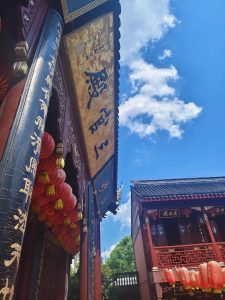
The temple itself is relatively small, but its architecture reflects the charm of the Jiangnan region. Red walls and dark-tiled roofs surround a peaceful courtyard, while traditional bell and drum towers, a small bridge known as Huixian Bridge, and a tranquil pond create a graceful and timeless setting.
Stepping inside, you can immediately feel a slower pace that stands in striking contrast to the bustle of the city outside.
If you enjoy Taoist culture and traditional Chinese architecture, or simply want to discover a quieter and less touristy side of Shanghai, Sanyuan Taoist Temple is well worth a visit.
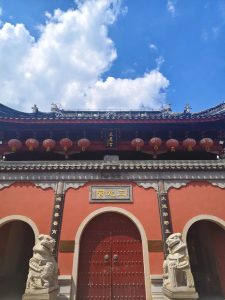 Address: 2119 Gaoke West Road, Pudong New Area, Shanghai, China
Getting There: Take Metro Line 7 to Jinxiu Road Station. The temple is about a 3–5 minute walk from the station.
Opening Hours: 7:00 AM–5:00 PM
Admission: RMB 5
Visitor Tips: We recommend checking the opening arrangements before your visit, as they may change. Sanyuan Temple is an active Taoist place of practice, so please keep noise to a minimum, dress modestly and appropriately, and respect the Taoist priests, their practices, and the temple’s religious etiquette.
What Makes Sanyuan Temple Special?
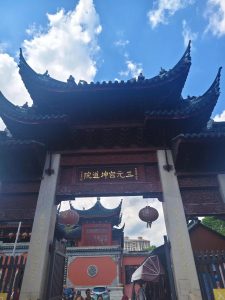 In Taoism, “Kun Dao” refers to female Taoist practitioners.
As a Quanzhen Taoist temple for women, Sanyuan Temple is home to female Taoist priests who live, practice, and chant scriptures here. This is one of the temple’s most distinctive features and sets it apart from many other traditional Taoist temples.
Quanzhen Taoism places a strong emphasis on spiritual practice and discipline, which is reflected in the temple’s peaceful atmosphere. Sanyuan Temple is first and foremost a place of religious practice, rather than simply a tourist attraction.
If you visit, please keep your voice down, dress modestly and appropriately, and respect the Taoist priests and their daily practices. These are the basic courtesies expected at the temple.
Jiangnan Charm: Red Walls and Timeless Elegance
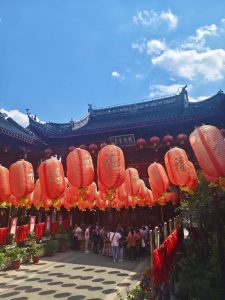 Although Sanyuan Temple is relatively small, its architectural details are well worth exploring.
The red walls and dark-tiled roofs give the temple its distinctive character. Traditional bell and drum towers stand on either side of the courtyard, while Huixian Bridge and the surrounding pond add a touch of classic Jiangnan garden charm.
Rather than the grandeur of a large historic temple complex, Sanyuan Temple has a more intimate and understated beauty.
If you appreciate traditional Chinese architecture, take a closer look at the San Guan Hall, the bell and drum towers, the red walls, and Huixian Bridge. The temple is compact enough to explore without spending too much time here, making it an easy addition to a half-day city walk in Shanghai.
After the Temple: Experience Everyday Life in Pudong
Sanyuan Temple is not located in a typical tourist district. The surrounding area is largely made up of residential neighborhoods where local people go about their everyday lives.
After visiting the temple, you can explore some of the nearby neighborhood restaurants and noodle shops, or try classic Shanghai dishes such as braised pork, sweet-and-sour spare ribs, Shanghai-style noodle soup, scallion pancakes, and xiaolongbao.
If you prefer somewhere to relax, you can also head to a nearby shopping area for a coffee or a light meal.
From the temple’s red walls and traditional architecture to the restaurants, residential streets, and everyday bustle outside, this blend of tradition and modern city life is part of what makes exploring Shanghai so enjoyable.
Sanyuan Temple is not a place that requires hours to explore.
It is best enjoyed on a relaxed afternoon: take the metro to Jinxiu Road, step through the red walls, explore the San Guan Hall, bell and drum towers, and Huixian Bridge, then return to the lively streets of Pudong.
If you’re interested in traditional Chinese culture or enjoy discovering lesser-known places in Shanghai, Sanyuan Temple offers a refreshing escape — a quiet Taoist sanctuary hidden within one of China’s busiest cities.